
Supreme Court Strikes Down Campaign Finance Limits
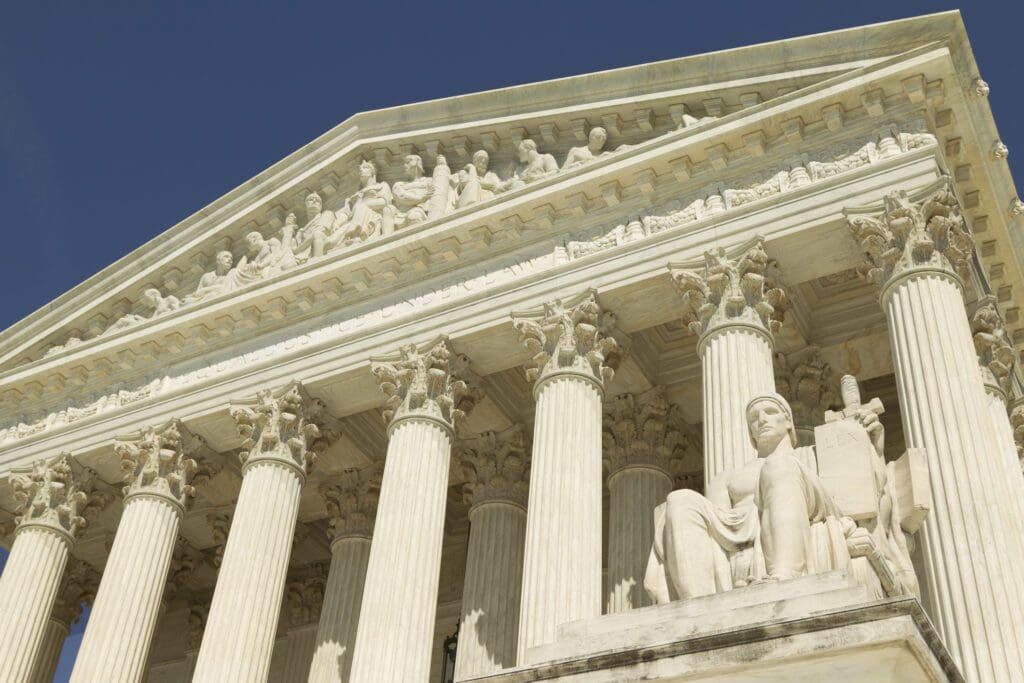
The Supreme Court on Tuesday struck down 50-year-old limits on how much political parties can spend in coordination with candidates in a ruling that is likely to reshape how campaigns are funded and redefine the role that parties play in electoral politics.
The decision fell along ideological lines, with the court’s six conservative justices ruling that existing limits on coordinated party expenditures violate the First Amendment and the three liberal justices dissenting.
The court’s ruling in National Republican Senatorial Committee v. Federal Election Commission is the latest to chip away at campaign finance regulations. It’s also among the most consequential since the court’s 2010 ruling in Citizens United v. FEC, which opened the floodgates for corporate and union spending in elections.
Writing for the conservative majority, Justice Brett Kavanaugh argued that the limits on coordinated party expenditures established by the more-than-half-century-old Federal Election Campaign Act amounted to an unconstitutional violation of free speech rights. By doing away with those limits, he argued, it levels the political playing field.
“Whether the Democratic party, the Republican party, or other parties, all political parties and candidates going forward can compete equally under the same rules regarding coordinated expenditures and can structure their fundraising, spending, and political speech on a level playing field as they see fit within the law,” Kavanaugh wrote.
But for the time being, at least, the ruling is likely to favor Republicans, who have over $125 million more than Democrats in their party committees. Lifting the coordinated party spending limits effectively allows party committees to spend as much as they want in coordination with candidates and, in effect, gives them access to the lower advertising rates afforded to candidates.
Republicans also made clear that they wanted the coordinated spending limits done away with. The legal challenge to the coordinated spending limits was first brought in 2022 by Vice President and then–Senate candidate JD Vance and Republican groups. At the time, the Biden administration defended the existing restrictions. Once Trump took office, the federal government changed sides in the case, siding with the NRSC against the spending limits.
In a memo to supporters and political allies on Tuesday, the NRSC acknowledged that the GOP was more likely to benefit from the ruling, writing that “the practical impact is asymmetric.”
“This cycle, the Republican party committees vastly outraised our Democrat counterparts, and the more a committee raises, the more it benefits from unlimited coordinated spending at preferential rates,” the memo reads. It also advises campaigns to “preserve direct campaign dollars for where they’re most valuable and lean on the NRSC to absorb costs where centralization creates efficiency — polling, data modeling, shared services, and scaled paid media.”
In a dissenting opinion on Tuesday, Justice Elena Kagan warned that the majority’s decision further gutted campaign finance laws enacted to curb corruption, creating “a legal regime increasingly unable to stop political corruption, and thus to preserve our institutions’ democratic legitimacy.”
Democrats and campaign finance watchdogs decried the Supreme Court’s ruling on Tuesday, arguing that it will water down the power of small-dollar donors and expand the influence of big money in politics. While individuals can give only $3,500 per election to a candidate, they can give up to $44,300 to a national party committee per year. That money can now effectively be passed along to campaigns.
“By eliminating the limits that have long governed how much money parties can spend in coordination with candidates, the Supreme Court has further empowered wealthy donors and special interests with outsized influence in elections,” said Michael Beckel, the director of money in politics reform at campaign finance reform group Issue One.
Updated on June 30, 2026 at 11:35 a.m. ET.