
What Political Pros Need to Know About the Mail Ballot Case Before the Supreme Court
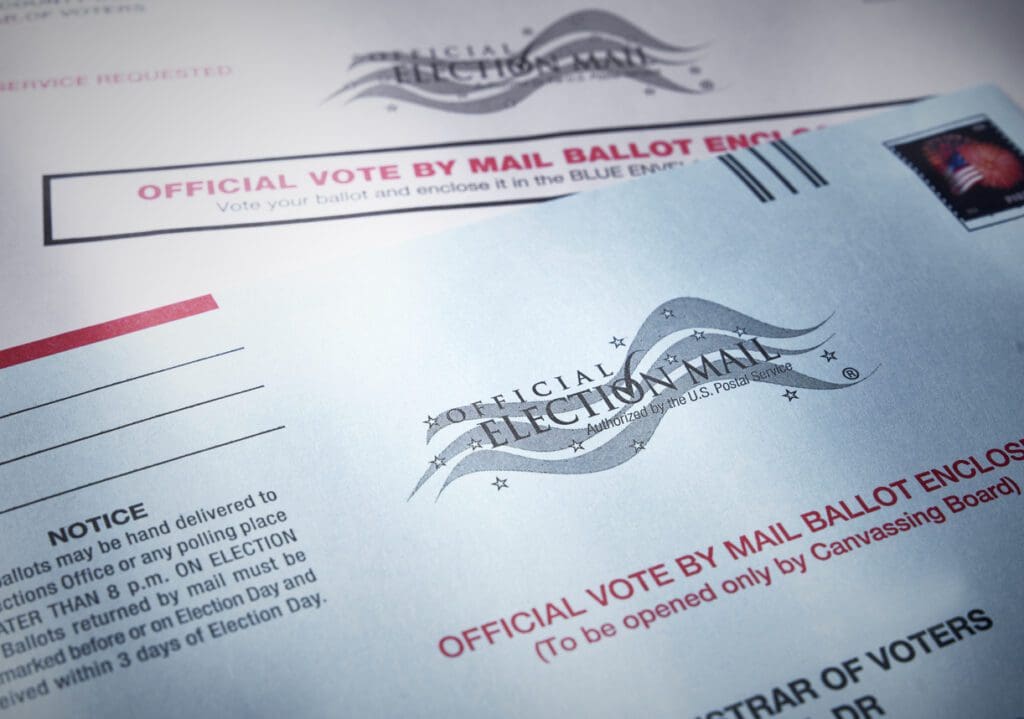
The Supreme Court on Monday heard arguments in a case that could reshape the contours of how states handle mail-in ballots, carrying major consequences for the 2026 midterm elections.
The case, Watson v. Republican National Committee, centers on when mail ballots must be received by election officials. If the Republican plaintiffs get their way, it could upend state election rules and potentially lead to hundreds of thousands of mail-in ballots being disqualified.
Here’s what you need to know:
Where Did the Case Start?
The RNC, Mississippi GOP and two private individuals filed suit in Mississippi federal court in January 2024 challenging a state law that allows mail ballots to be counted so long as they’re postmarked by Election Day and received by officials within five business days.
It’s worth noting that the case was brought by allies of President Donald Trump, who has claimed for years that mail voting is prone to fraud. In the 2020 presidential election, Trump raged against late-arriving mail ballots as his election night lead evaporated and he eventually lost the race to former President Joe Biden.
Since then, Trump and his allies have sought to place new restrictions on mail-in voting or called for the practice to be banned altogether. During his State of the Union address last month, Trump demanded far tighter rules around mail-in voting, saying there should be “no more crooked mail-in ballots except for illness, disability, military or travel.”
What’s the Issue?
At issue is whether federal statues establishing a single election day preempt state laws that allow ballots cast by that election day to be received by officials after the fact. The Republican plaintiffs in the case argue that an election isn’t actually concluded until officials receive the ballots, and that, by allowing ballots received after Election Day to be counted, Mississippi’s law stands in violation of federal rules.
What Does It Mean for Politics?
The ripple effects of this ruling could reach far beyond Mississippi.
More than a dozen states — plus the District of Columbia, Puerto Rico, Guam and the U.S. Virgin Islands — currently allow mail-in ballots to be counted as long as they’re postmarked by Election Day and arrive within a set window afterward.
If the Supreme Court sides with the RNC, those laws could be wiped out overnight. Military and overseas voters would likely feel the pinch most acutely; they’ve depended on these grace period policies for years, simply because international mail doesn’t run on a courtroom’s schedule.
It’s not only states that would have to scramble to make changes if the Supreme Court sides with the RNC. Campaigns, committees and advocacy groups – especially on the left – that have banked on mail voting would have to rethink their GOTV strategies and messaging.
How Did the Justices Respond?
During Monday’s oral arguments, the court’s conservative majority signaled skepticism of state laws that allow officials to count late-arriving ballots. At one point, Justice Samuel Alito mused aloud whether a “big stash of ballots” that arrive after Election Day could flip the results and give the appearance of fraud.
The court’s liberal minority, however, appeared to lean toward upholding the Mississippi law, with Justice Sonia Sotomayor expressing concern that overturning state election rules just months before the November midterm elections would create “confusion and disenfranchisement.”
A ruling in the case is expected by late June, meaning that there would be enough time for states to change their election practices before November.