Lessons From Old Machines and Modern Activists Can Save Dems’ Ground Game

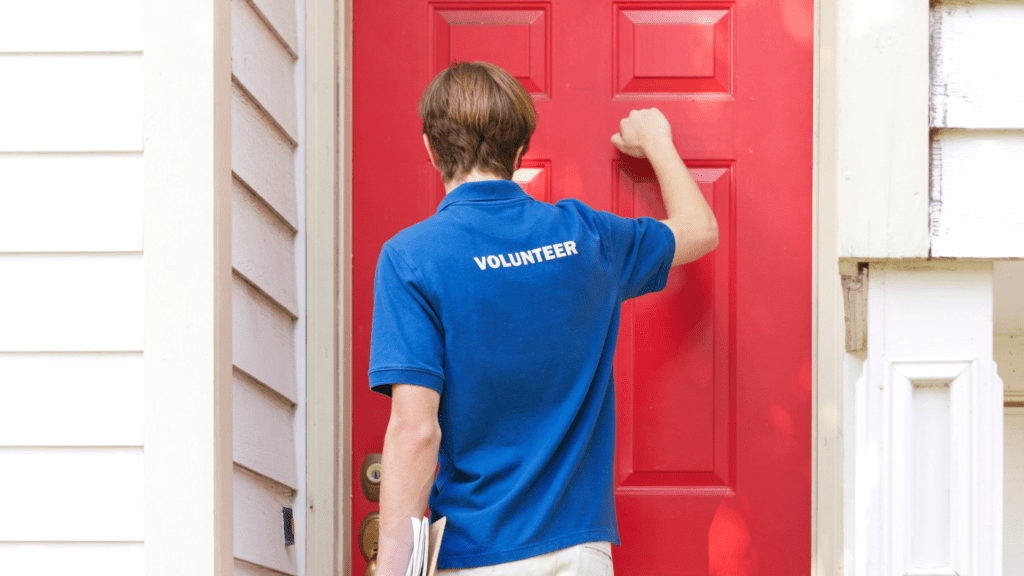
Field organizing in the Democratic Party has changed dramatically over the last 50 years. Until the 1970s, contacting voters for national elections could reliably be handled at scale by only a few groups in the Democratic coalition: urban political machines and organized labor.
National leaders from Presidents Franklin Roosevelt to Harry Truman, John Kennedy and Lyndon Johnson entrusted much of their political fate to these “machine” bosses like Ed Flynn, Tom Pendergast, Richard Daley and George Parr.
These machine groups were critical to national election success because they could reliably scale voter contact across key battleground states. Less obvious today is that they were also effective because they employed local party faithful – often through patronage – who developed personal relationships with voters.
These folks understood their neighborhoods, knew how to persuade residents and ensured that once convinced, those voters turned out on Election Day. This focus on human-to-human interactions turned out to be grounded in hard, scientific evidence. Academic research from the 1970s through 2024 consistently demonstrates that human-to-human interaction has the largest impact on voter behavior of any campaign tactic.
In the 1980s and 1990s the machines disintegrated in corruption scandals and organized labor’s membership declined. After two devastatingly close losses to George W. Bush at the turn of the century, party tacticians like David Plouffe assessed the inability to reliably scale and contact targeted voters across battleground states as an existential threat to the 2008 Obama Campaign. Plouffe brought field organizing in-house and scaled it to reliably contact millions of voters across the battle ground states.
However, after Barack Obama, party leaders largely ignored the third core requirement: building sustained relationships between activists and voters.
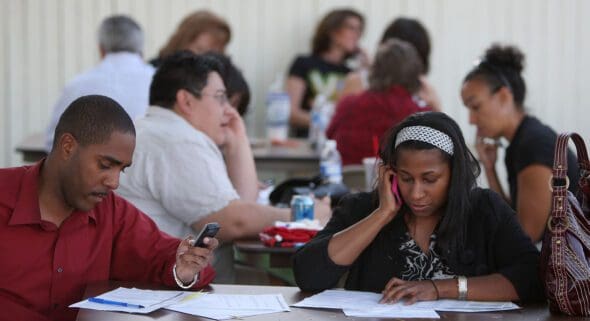
After the 2012 campaign, field operations became bureaucratized and layers of management multiplied to ensure scale and reliability. Success was increasingly defined by pristine bureaucratic process rather than vote totals. For example, canvassers began knocking doors in the middle of weekday afternoons to demonstrate to the burgeoning Democratic Party bureaucracy that every door had been knocked, even though almost no voters are home in the middle of a weekday afternoon.
Consequently, answer rates at the door hovered around 5 percent in 2024 down from about 30 percent just a few cycles earlier. Field became a self-licking ice cream cone where one bureaucratic process fed another and goals shifted from conversations that drive votes to metrics that drive bureaucratic processes.
Field was dead in the national Democratic Party.
Meanwhile, smaller progressive campaigns were innovating. Marriage equality and marijuana legalization movements of the 2000s and 2010s deployed fervent activists at voters’ doors. Then in 2015, Bernie Sanders tapped into that and other progressive activist energy, giving volunteers the tools to self-organize while using technology to hold them accountable. These efforts prioritized contacting voters over bureaucratic processes. In each case, public opinion shifted in part because activists built relationships at the door and persuaded voters one conversation at a time.
As our bedrock constituency of working-class voters turned more Republican in 2024, it’s crucial we both maximize turnout among our base and persuade swing voters. Both of these tasks require face-to-face interactions. Caller ID and Ring cameras are ubiquitous, and Americans have retreated from community groups that could impact voting behavior, so human-to-human interactions at the door are critical. To address this, during the 2025 New Jersey campaign, in Passaic County, we tested a simple premise: return to what works, but execute with modern tools.
First, we made the radical decision to knock doors when people were home: evenings and weekends.
Second, we reduced bureaucratic processes and used technology common in other industries to manage and quality-control canvasser work. This lowered overhead, allowing us to charge the campaign less and pay canvassers more. Higher pay and bonuses reduced turnover and kept activists on doorsteps talking to voters.
Third, we kept canvassers in the same turf. This increased answer rates at the doors, which is just common sense. If a stranger knocks on your door once, you may ignore them. But if you repeatedly see the same person in your neighborhood and hear that your neighbors had positive conversations with them, you are more likely to open the door on the second, third or fourth attempt.
Conversation quality improved as well. Canvassers remembered prior interactions and understood which issues mattered most to specific voters.
The results were significant. Passaic County swung 30 points in 2025 versus the prior trend dating back to 2017. We are under no illusion that canvassing did 30 points. Trump did that. However, compared to other parts of the state where these tactics were not implemented, our contact rate reached 18 percent—nearly four times the national party nadir of 5 percent. We estimate that added roughly 8,000 votes to the final tally relative to comparable counties.
As a party, we must stop wasting money on field programs that value bureaucratic process over electoral outcomes. Instead, we must take a page from the old machine bosses and modern activists alike and both reliably scale voter contact efforts while at the same time facilitating relationships between activists and voters.
Only then will we be able to recreate the ground game that installed progressives like FDR and Obama in the White House.
Chuck Rocha is President and Founder of Solidarity Strategies.
Jake Braun is the CEO of JBC Campaigns and the former deputy national field director for Obama for America 2008.