
‘A New Normal’: Fundraising Platforms Enter an Era of Scrutiny
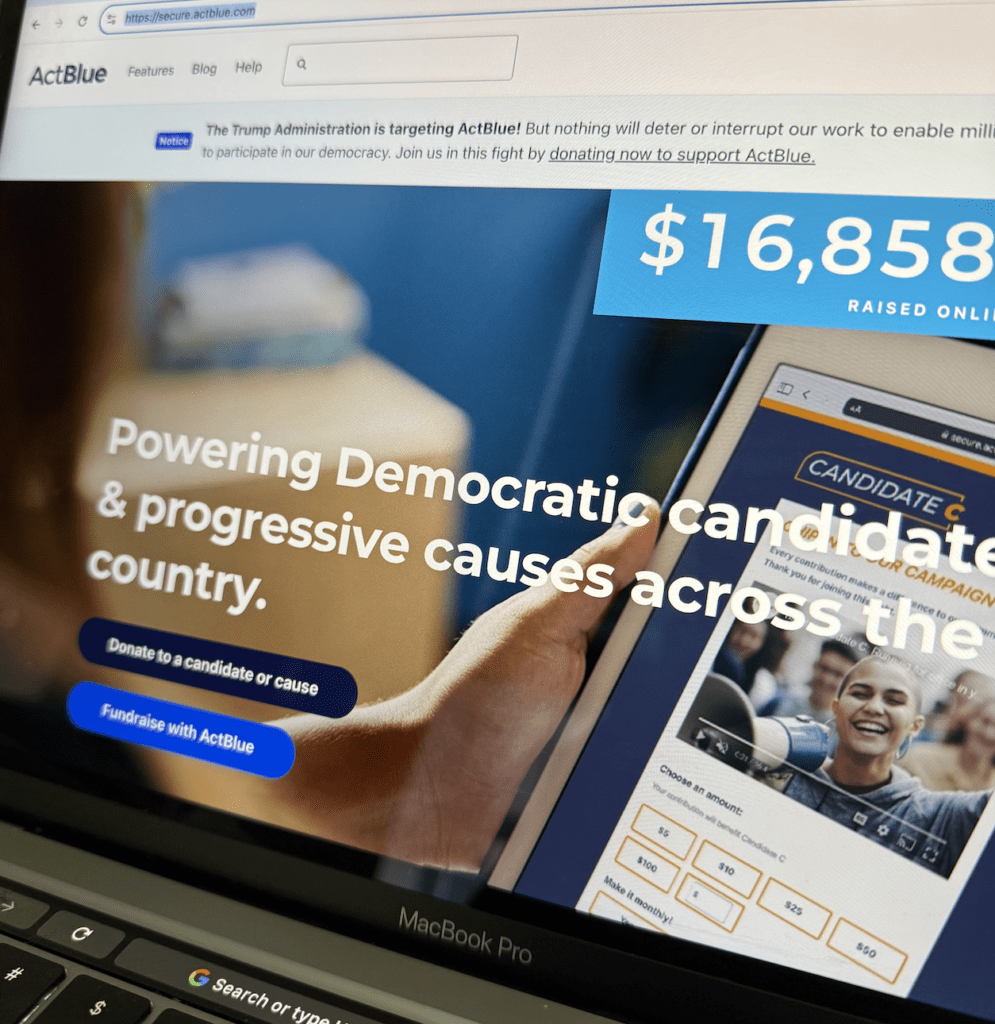
The backbone of online political fundraising is facing a stress test like never before, as lawmakers ramp up scrutiny on the platforms responsible for processing billions of dollars in contributions to candidates, committees and causes.
ActBlue CEO Regina Wallace-Jones’ appearance last week before the House Administration Committee underscored the tense moment that the organization finds itself in as it faces investigations from three separate congressional panels and President Donald Trump’s Justice Department.
Facing questioning from House Republicans, Wallace-Jones repeatedly invoked her Fifth Amendment rights against self-incrimination – a strategy that she argued was in protest of what she said was a “campaign of political retribution” being waged by Trump and Republican lawmakers.
At the same time, the GOP’s main fundraising platform WinRed is facing mounting scrutiny from Democrats, who are now vowing to launch investigations into alleged fraud, deceptive fundraising practices and potential foreign contributions on the platform if they recapture control of the House in this year’s midterm elections.
“When there is clear evidence of fraud, deceptive fundraising methods or potential foreign contributions in American elections, Congress has a duty to investigate,” House Administration Committee Ranking Member Joe Morelle (D-N.Y.) said. “House Republicans have not taken that duty seriously. But next year, rest assured, committee Democrats will.”
The same day that Wallace-Jones appeared before the House Administration Committee, the panel’s top Democrats sent a letter to WinRed CEO Ryan Lyk demanding that he sit for a transcribed interview and that the organization turn over a trove of documents and communications regarding “actual or alleged misconduct by WinRed staff” and its fraud prevention policies.
To be sure, House Democrats currently have little ability to enforce their request, given that Republicans control the House Administration Committee.
Still, the flurry of official activity targeting both parties’ primary digital fundraising platforms suggests that the political donation-processing space is entering a more volatile era.
“I think we’ve been aware for a while now that Dems were going to look at the ActBlue investigation and want their own for WinRed,” said one Republican fundraiser, who requested anonymity to discuss the political and fundraising landscape candidly. “It just kind of feels more real now. Like, we have to be honest about our odds here. Keeping the House is a problem for us.”
“These investigations – it might just be a new normal,” the fundraiser added.
Republicans have spent more than two years probing ActBlue’s policies for vetting illegal foreign political contributions and donor fraud. The platform has insisted that it has done nothing wrong and cast the investigations as a blatant attempt by the GOP to go after a cornerstone of Democratic fundraising.
But those efforts have ramped up over the past year or so. Trump ordered the Justice Department last spring to investigate the platform, and that probe remains ongoing. Meanwhile, House Republicans have homed in on reporting from The New York Times alleging that Wallace-Jones may have misled congressional investigators with previous descriptions about ActBlue’s donation-vetting practices.
While Democrats have largely stood by ActBlue, the investigations have prompted some to explore other options. Put another way, ActBlue remains the go-to platform for most Democratic campaigns, but other platforms, like GoodChange and Oath, are being added to their fundraising operations.
Brian Derrick, the co-founder and CEO of Oath, which has a fundraising model distinct from ActBlue, described the investigations into ActBlue as blatantly partisan. But he also argued that it doesn’t make sense for there to be a “single fail point” for Democrats.
“We want ActBlue to succeed. We don’t want partisan attacks to inhibit them,” Derrick said. But, he added, “for us to have a single fail point for data, field organizing, voter contact, you name it, it doesn’t make sense for everything to run through a singular pathway.”