
Q&A: The Strategy Behind Democrats’ Recent Mayoral Wins
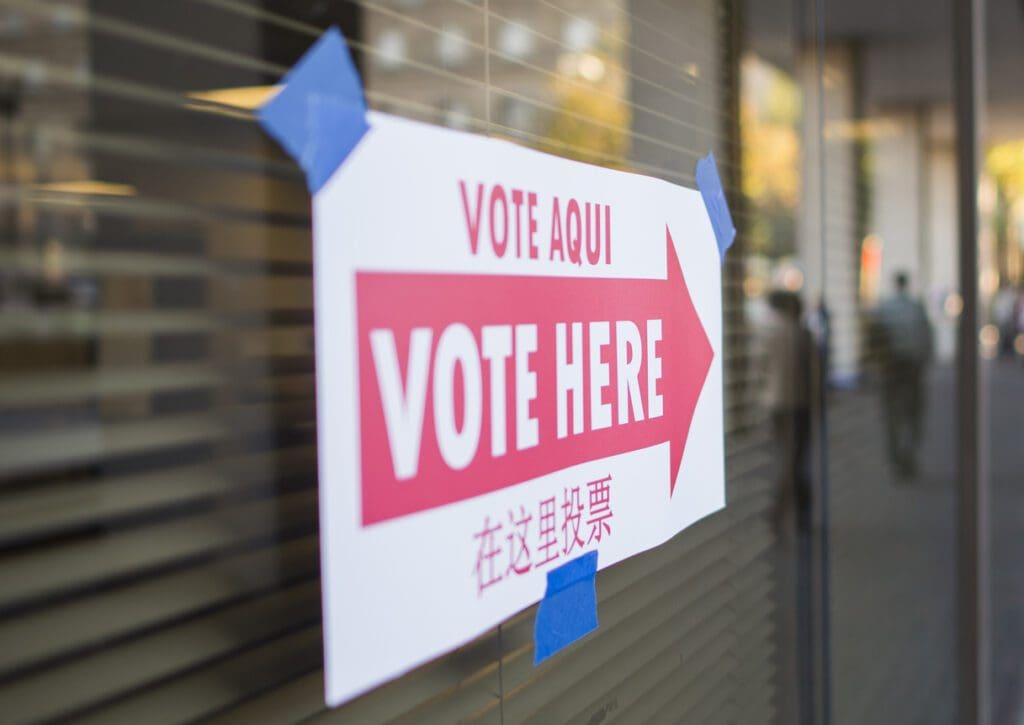
When Andy Thompson edged out Republican Mike Liebelson in the mayoral race in Boca Raton, Fla. last month, he became the first Democrat in over 30 years to win the seat.
That victory – combined with a spate of other electoral victories for Democrats in recent months – underscored what some in the party see as a renewed focus on downballot and local races. Campaigns & Elections spoke with Kansas City Mayor Quinton Lucas, the president of the Democratic Mayors Association, about the strategy behind the recent wins and what it says about the current political environment.
The following interview has been edited for clarity and length.
C&E: Democrats have already seen some successes over the past year. I’m in Florida, so Eileen Higgins’ win in Miami comes to mind. Can you give us the broad overview of how you’re looking at the playing field in 2026?
Lucas: You know, look, I’m excited about where we have been. You look at some of our victories in 2025. I’m very excited about Eileen Higgins, who turned over a long-held Republican seat. You look at Boca Raton, more recently. I think that that’s going to bear fruit. And you look at the pipeline for mayors. Currently, there’s a Republican mayor of Dallas. I think Democrats are obviously getting that large city back. You’re seeing successes throughout the country right now. And I think we’re going to see that in 2026 too.
To the question of why is it important – these mayors’ races? Why do we care about Boca Raton? Why do we care about some of these other places? I think it’s an amazing sign for the Democratic brand. It is not sunk. And while there may be negatives that have burdened Congress for any number of reasons, we’re seeing right now that when the American people have a choice between a party that’s showing successful governance versus one that’s showing chaos, they’re picking successful governance. And you’re seeing that in seats where we have not always had success.
C&E: You’ve run for mayor a couple times yourself. Can you tell us a little bit about the challenges that Democratic mayoral candidates have historically faced in their campaigns? At the national level, there are groups like the DCCC and DSCC that provide a lot of infrastructure and support for House and Senate candidates, but that’s not necessarily the case for mayoral candidates. What are some of the difficulties that these people face?
Lucas: It is not easy running for mayor. All of us start somewhere. I started in a fairly crowded 12-person race, I believe. And so I think my view is that we’re looking to build more and more national resources. I think the DMA has a chance to be one of the most important national Democratic Party organizations, precisely because mayors are, first of all, usually the most prominent public officials in every media market.
Think about it. Let’s go to the New York metro. Yes, there’s a governor, right? But we recognize that Mayor Mamdani holds large influence. Go to Los Angeles. Go to many other places. It’s really hard to get to a market of any size where the mayor isn’t the leading spokesperson for competent governance and how you find solutions that address our society.
So our goal at DMA is to make sure that we have resources to match that – that we have communications help, that you have digital platform and programming help and obviously that you have policy tools that we’re exchanging among each other. Because yes, running for mayor can be a lonely experience until you realize there are hundreds of others, who are just like you, who’ve dealt with very similar things.
That’s kind of where I start. And that’s why I think I’ve been as involved as I am: to make sure that we see even more mayors that recognize that support exists.
C&E: You were just appointed president of the DMA in January. Tell us a little bit about how you’re approaching this job. What do you have in mind for 2026 and beyond?
Lucas: First of all, in 2026, the goal is always to see where we can win. How do we win, and then, frankly, how can we make sure that we are able to win? You don’t nationalize every race, particularly local mayor’s races, outside of a few major cities. Karen Bass in Los Angeles will probably get that attention. But you do nationalize the successes that mayors have. And so what my expectation will be is that, as we’re competing in places like Raleigh, N.C. – a very important swing state – as we’re looking at other places, including traditional red states, how do we make sure that the positive messaging that comes out of these cities is something that can spread?
C&E: I want to ask a little bit more about that. Obviously these big mayoral campaigns in places like Los Angeles and New York have big resources and infrastructure. But how do you want to be involved with some of these smaller campaigns that don’t get the same level of attention?
Lucas: First of all, we have a professional staff, because every race matters to us. And part of why we have that professional staff is so that we can provide resources where they’re necessary. We can do something as simple as writing a press release announcing that someone’s running in a ruby-red community. And I think a big part of my 2026 is to make sure we get out there with that level of exposure. I’ve given some speeches myself in my part of the country – in places like Topeka, Kan. or Columbia, Mo. – talking about how we care about every mayor, talking about how we are a quick resource. I think that’s what you do.
And I think that making sure that the national press understands that there is a consistent through line between mayors in some of our larger cities and mayors in smaller places is important. We want to talk about competent governance, about affordability, about fair pay for fair work and our relationship with organized labor in all of our communities. That’s the sort of thing that I think you can say, broadly, is a Democratic message. And at a time where you have debates about a whole lot of other things, I think it’s a message that is able to cut through pretty successfully.
C&E: To point out the obvious, it’s almost always easier to win in a year when your party’s out of power in D.C. Donald Trump’s approval ratings are down. And to an extent, even local races are affected by the national political climate. How are you thinking about building an operation that can withstand the test of time and be a force, not just in 2026, but in ’27, ’28, ’29 and beyond that?
Lucas: I think there are a few things that you do. First of all, you make sure that you are useful to your members. The most successful long-standing organizations, whether in campaign work or just fraternal organizations and politics, are those organizations that people know they can call and they’ll get some real productivity.
We are making sure that people know that they have a contact that can help them deploy a debate prep strategy, a communication strategy; that helps them with introductions to donors and getting donors informed about the plethora of races around the country, and how a race in, let’s say, Little Rock, Ark., may actually be very pivotal to them in the long term, when perhaps they don’t know or don’t care to look outside of Washington. So that’s where we are.
For us, I think step one is our utility to our members, step two is utility to our donor class and then, of course, there is the communication strategy long term. How do we make sure the media knows we exist and that mayors remain important, no matter the national discourse?
C&E: Let’s talk a bit more about media strategy. Yes, there’s legacy media that still has a fair amount of influence, but there are a million other platforms right now that are growing rapidly. Most Americans are getting their news online now – through Facebook or YouTube or somewhere else. How are you coping with that new media environment and do you have any advice for candidates running on how to reach voters on these non-traditional platforms?
Lucas: The only consistency is change. That’s the only thing that we see happening long term. And so I think the advice that we provide to new candidates is that we need to adapt. It’s not enough to say ‘I’m not good at TikTok, I speak traditionally, et cetera.’ It’s instead important for us – vital, actually – to be competing in all of the spaces where information is being shared. You don’t sit out any space. You don’t sit out any discussion, You don’t sit out any debate.
This is one place where former Mayor Pete Buttigieg, I think, does the strategy well. You go on Fox News, you go to the difficult press outfit, you go to any number of places to share the difference that you are looking to make.
C&E: We’re seeing mayors play a more important, more visible role than ever before. Jacob Frey in Minneapolis is a good example. That national attention can be really great for fundraising and name recognition, but it can also distract from local issues. How are you thinking about balancing those interests?
Lucas: There’s not a Republican or a Democratic pothole. But there really are Republican and Democratic differences as to whether bridges in America should be fixed or whether there should be funding to support healthcare for our aging populations and for our children. The policies that are coming out of Washington right now are devastating to American cities. So I think that what we will continue to do actively is to be a consistent voice on how Democratic priorities and policies make a positive difference for us, and, frankly, to speak common sense in a way that I’m not sure our friends in Washington always do.
I went to law school. I’ve done a lot of things. I can’t explain to you the entirety of the reconciliation process. I can tell you that if we pave roads, the drive will be smoother for people. I can tell you that we gotta negotiate with our unions to make sure trash gets picked up in our communities. And while I think that there are very sophisticated solutions to problems or that Washington can be addictive, I think that the best solutions are those that come from local government; that we need Washington and that we need state capitals to stay out of the way. And frankly, we need elected leaders that know how to speak to people – that know how to get things done.