
Hungary’s Next Steps: Restoring Rule of Law or Authoritarianism 2.0?

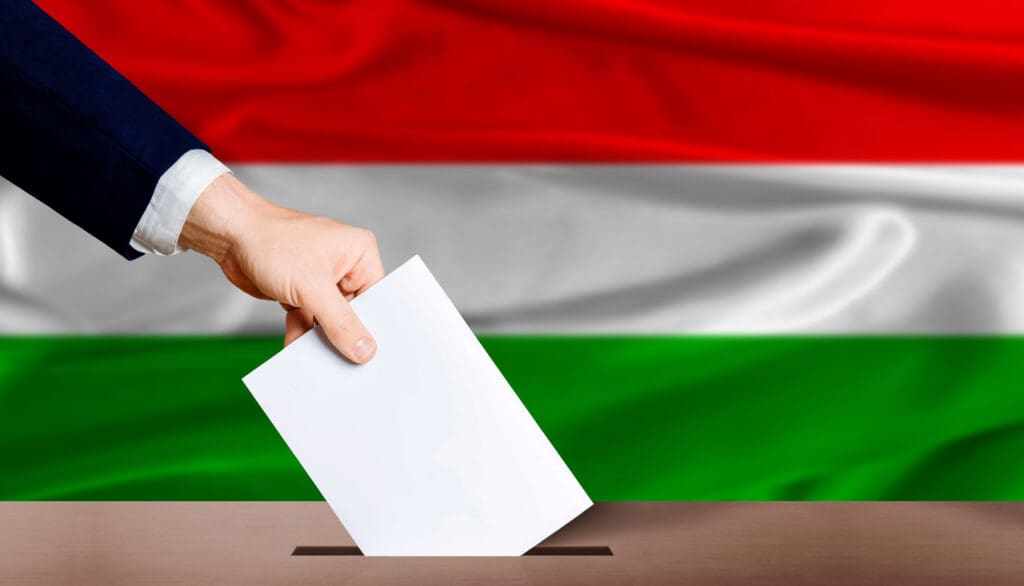
Hungary’s presidential election is a reminder that winning elections is only the first step to restoring democracy. (Credit: IherPhoto via iStock)
In April, Hungary’s voters turned out in record numbers to end Viktor Orbán’s 16-year stranglehold on power and elect Péter Magyar, head of the Tisza party, as prime minister. The election was a much-needed sign of hope for democracy amid rising rates of authoritarianism around the world.
Magyar’s election proved the health of civic space and vibrance of civil society are not just bureaucratic bellwethers but pillars of democracy, forces that can effect national change. A strong civil society — the social tissue of non-governmental organizations, community and faith groups, academic institutions and independent media engaging one another and the state at all levels of government, all of which Orbán oppressed — is indispensable to preventing authoritarianism’s rise in the first place and, in this case, preventing its recrudescence.
While he followed through on some anti-corruption promises immediately, Magyar’s short tenure has not been without missteps. An early test of his commitment to democratic reform arose in the form of brother-in-law Márton Melléthei-Barna’s candidacy for justice minister. Although Barna withdrew from consideration, Magyar’s support for him even as he criticized Orbán’s cronyism threatened the narrative Magyar seeks to advance — that of a turn back toward democracy.
Early coverage focused on campaign tactics; Magyar and his party, Tisza; and what Orbán’s defeat may mean globally. Now, four months later, it’s time to take measure of Magyar’s commitment to restoring democracy and civil society in Hungary thus far. Will Magyar fight corruption without resorting to the types of tactics he ran against?
Upon election, Magyar became head of the country ranked last in the European Union for rule of law. He followed through on early promises, announcing cabinet picks immediately and swearing in 16 ministers on May 12 following just two days of parliamentary deliberation — exactly one month after Orbán’s defeat. Magyar moved on to “Operation Purgatory.” Magyar’s party, Tiszla, created a National Asset Recovery and Protection Office in July and Hungary joined the European Public Prosecutor’s Office. These bodies are intended to help recover funds improperly used under Orbán.
However, Tisza, which holds a two-thirds majority in parliament, also used its numbers to pass a major constitutional amendment—the 17th Amendment to the Fundamental Law. Purportedly aimed at rooting out remnants of authoritarianism, its effects are far-reaching. The July amendment required Orbán-aligned former president Tamas Sulyok to resign and created a term limit of eight years for prime ministers. It also set legislative term limits, imposed a judicial retirement age and changed mechanisms for appointments in the name of preventing corruption and cronyism.

Last Tuesday, Tisza’s parliamentary representatives — comprising two-thirds of the legislature — elected former Supreme Court chief justice András Baka president 140-6, with no abstentions.
Although Magyar holds far more power, Baka is a powerful figurehead. Indeed, his assistance will be needed as Hungary treads new, treacherous ground to reinforce legitimacy. Challenges lie ahead that will require cohesion and, likely, coalition-building. The most drastic of these tasks—no matter how necessary—begins shortly. Magyar and Tisza have declared their intent to draft a new constitution in September. The involvement or exclusion of academics, advocates and other civil society actors in that process says everything.
So far, so good. Magyar has prioritized the recovery of civil society, showing that he recognizes the importance of civil society to democracy and rule of law. Although Orbán reshaped Hungary’s political system to his advantage, he did not maintain power for so long through electoral engineering or corruption alone. His political longevity owed at least as much to his war on civil society and its chilling effect. Orbán targeted independent media, universities and non-governmental organizations that might have kept his authoritarian tendencies in check.
For now, in this new Hungarian landscape, civil society organizations, alongside media, appear to be holding Magyar accountable. Amnesty International Hungary, among others, has criticized some of Magyar’s tactics for removing Orbán’s followers. Despite the vulnerability it creates, Magyar has committed to re-opening civic space, defunding some of the extra-governmental groups that aided Orbán in oppressing organic, authentic civil society organizations, academics, journalists, advocates and everyday Hungarians.
Beyond Budapest
If the challenges Magyar and his party are up against sound familiar, there’s a reason: They’re facing the authoritarian playbook and attempting to dismantle nearly 20 years of its effective implementation. Hungary is simply ahead of the game, democratically speaking. Autocracies outnumber democracies for the first time in more than 20 years.
The deterioration of the rule of law and closing of civic space is accelerating across the globe at a pace not seen in generations. Scholars like Staffan Lindberg, who leads the Varieties of Democracy project, have warned that the current wave of authoritarianism exceeds even that of the 1930s in speed and reach. Elections still happen, but the pillars of civil society that would legitimize them, such as the press and non-governmental organizations, are in peril.
The United States is not immune to this global trend. Rather, it’s at the vanguard, recently downgraded from a liberal democracy and hurtling toward authoritarianism even more quickly than Hungary or Russia did. Conditions are ripe: A decades-long decline of trust in institutions and the erosion of social capital, the foundation of civil society, left the U.S. particularly vulnerable when COVID ushered in an era of empty offices and default-remote meetings. Civic space is now closing in the U.S. at an alarming rate – and even more quickly since the 2024 election.
What is most concerning about the push-pull of authoritarianism and rule of law in the U.S. as opposed to, say, Hungary, is the implications for foreign aid. Executive orders and federal funding cuts in the U.S. have depleted or destroyed agencies, gutting both domestic and foreign beneficiaries. Having led the field for years in giving, the U.S. is making drastic cuts: Foreign aid is at its lowest level in decades. Although overall charitable giving remains strong, other forms of funding — like small-dollar donations from individual donors — have been waning for years, making the loss of governmental funding that much more devastating abroad.
Will the weeks ahead prove Hungary’s democratic U-turn sustainable, with Magyar’s center-right position and sometimes unorthodox tactics ultimately compatible with rule of law, or reveal that Hungary has succumbed to authoritarianism 2.0?
Rebecca Buckwalter Poza is a Spanish-American cultural commentator, social critic, activist, and attorney fighting to uphold the rule of law and democracy for all. You can read more of her work at www.buckwalterpoza.com.