International Women’s Day: Syrian Americans Learn to Work Washington

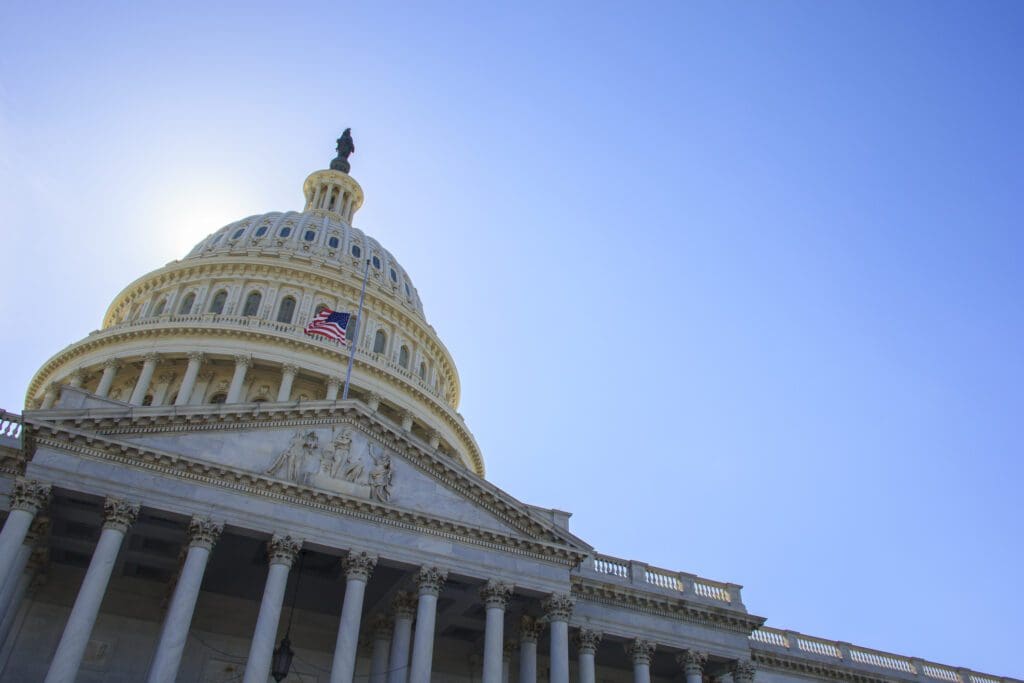
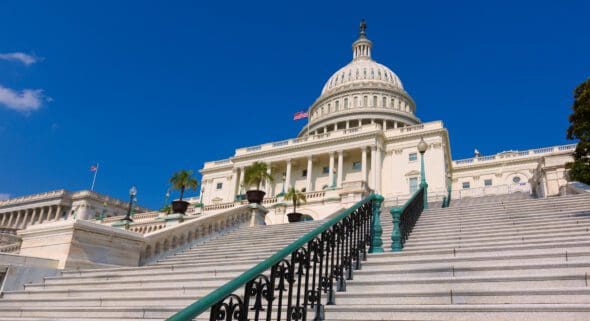
Walking the halls of the U.S. Capitol, Syrian Americans are reminded how far our community has come and how much responsibility now rests on our shoulders. The marble is cold, the pace is frenetic and the weight of history hangs heavy down every corridor.
In the whirlwind following the fall of Syria’s brutal Assad regime in late 2024, many of us stepped out of our normal lives and plunged into the high stakes world of Washington power, international development and diplomacy.
To mark International Women’s Day, Syrian and Syrian American women thank all those who have aided this journey. We are grateful to those who helped hold our country together through the darkest years of the 21st century and to those who are now helping move Syria forward.
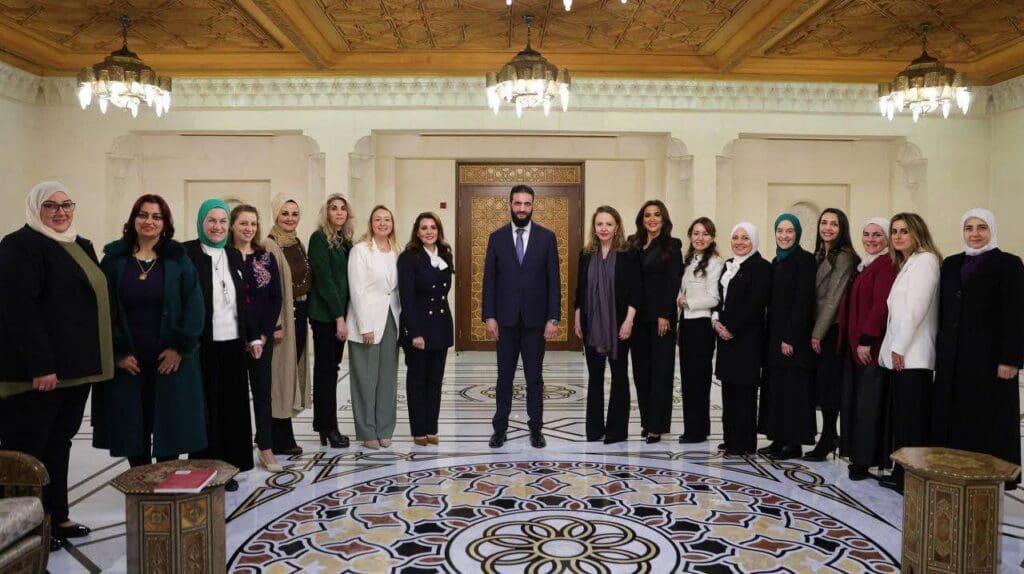
Over the past year, our delegation has grown into a diverse coalition of Syrian Americans. Doctors advising refugee communities, engineers working to restore power infrastructure, students, community organizers, entrepreneurs, mothers, grandmothers and teachers have all stepped up. At the center of this effort are Syrian and Syrian American women who have emerged not only as advocates, but as bridge builders between two societies.
We do not come to Capitol Hill, the White House or Washington’s think tanks to deliver lectures or with our hands out. We come to tell the stories of our homeland. The woman who needs a functioning banking system simply to buy bread. The officials now attempting to implement investment reforms. The families returning home after years of displacement.
Our role is to ensure the world does not simply observe Syria’s transition, but participates in helping it succeed.
Related
From Election Day to Lobby Day One: The Missing Middle
Across time, societies define their reality by either building walls or building bridges. For years, the Caesar Act sanctions implemented by Washington were a necessary wall – a tool of pressure against a brutal dictatorship. But in a post-Assad reality, that same wall began to restrict the very people it was meant to protect.
Policy must keep pace with reality. One of the most significant policy shifts over the past year has been the repeal of the Caesar Act. Many leaders across Washington came to recognize a fundamental truth: a country cannot rebuild if its new reality is still treated as if the old regime remains in place.
This progress was not the work of any one group. It was the result of a broad coalition of senators, members of Congress, staffers, policy advisors and experts who understood that a failed Syria would create a dangerous vacuum in the Middle East, one that would threaten regional and global stability.
At this moment, with America at war with Iran and the broader Middle East in crisis, the importance of a stable Syria becomes even clearer. A country that moves toward stability, economic recovery and constructive engagement can serve as a pillar for regional balance rather than another arena for conflict.
For that reason, we thank Washington and the many policymakers, thinkers and public servants who engaged with Syrian American voices during this critical moment.
But while the regime has fallen, the real work is only beginning. History shows us, from the Marshall Plan to global reconstruction efforts, that stability is built not by speaking about people, but by working with them.
To every woman who showed up in these halls, spoke in meetings, organized behind the scenes and carried the responsibility of representing our community: your persistence is the heartbeat of this moment. Together, with the support of many committed partners, we are demonstrating what principled leadership and civic engagement can look like.
On this International Women’s Day, we celebrate the women who stepped forward when history demanded it. The work of rebuilding Syria and strengthening the partnership between our two societies has only just begun.
Alia Natafgi is a businesswoman, real estate investor, and advocate focused on advancing peace and economic recovery in post-conflict Syria. As executive director of the Syrian American Alliance for Peace and Prosperity, she leads initiatives that foster U.S.-Syrian cooperation through advocacy, education, and economic engagement.