
Voters Are Buyers: Lessons From B2B Marketing


After three decades selling in B2B SaaS, MarTech and AdTech, I joined the Spot-On team to help campaigns more thoroughly understand the persuasion power of local media outlets with voters.
Almost immediately, I noticed something I didn’t expect: political campaigns are now wrestling with the challenges B2B companies faced five years ago.
The connection isn’t accidental. B2B companies spent years trying to replicate the precision and personalization of the Amazon or Netflix experience with “You May Like” or “Suggested for You” products, books, movies, clothing, food — literally anything.
Political campaigns are pursuing the same goal: having a message that moves a voter to ultimately make a “purchase” by voting for their candidates. But today’s campaigns are falling short for the same reason B2B personalization has foundered: They keep talking at people rather than listening to them.
Campaigns that cling to a 2024 playbook to target an issue-oriented electorate will see diminishing returns — and some already have. Those that adapt early will gain a durable advantage and, in some cases, surprise everyone.
Over the past five years, COVID and artificial intelligence transformed business marketing. Customers don’t need a salesperson to explain a product or service. They can do their own research and make decisions based on that information. We now see seven-figure deals close without a single sales conversation.
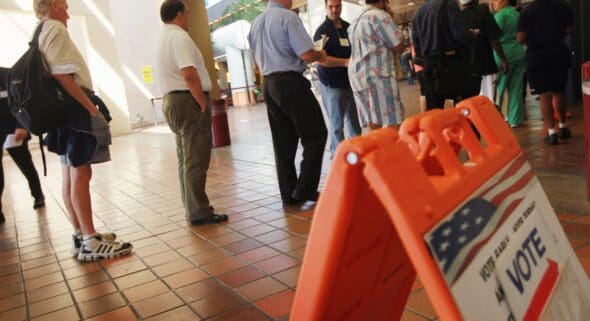
In an environment where voters express low trust in their institutions, today’s campaigns face a similar set of circumstances. Specifically, Gallup now estimates self-identified independent voters at 45 percent of the electorate. Central to this shift is the 56 percent of Gen Z adults who now identify as independents. Compare that to 47 percent of millennials in 2012 and 40 percent of Gen X adults in 1992.
These voters are a black box to campaigns using the techniques of the past. Voters may stick with party affiliation at the top of the ballot, but, as they move down, their choices become more fluid. This new reality is reflected in tighter Election Day margins. According to Ballotpedia, congressional races in 2024 were decided by a narrower average margin than in 2022 — and 47 state legislative races were decided by half a percentage point or less.
Like you, my email inbox, browser and voicemail are a virtual garbage dump of mass emails, creepy retargeting ads and bulk outreach. Since announcing my new role at Spot-On, it feels like every DSP, data and voter outreach sales and marketing team is trying to get my attention — even those who might consider our firm a competitor. As a buyer, this approach enrages me rather than persuades me.
Campaigns risk the same fate with mass texts, email blasts, inaccurate voter matching, sloppy or overly intense voter targeting and broad cable and broadcast buys. Although “spray and pray” can impress candidates and donors to load up impressions, many ad buyers end up being better at creating noise with volume impressions that don’t persuade voters. Will another panicked fundraising email move the needle? Do campaigns expect us to read a text over 30 words?
When I wrote my guide to B2B marketing, Some Assembly Required in 2025, data was the number one challenge cited by B2B go-to-market teams. “Intent data” had become the holy grail of marketing, but marketers soon learned it produced false positives even though we had plenty of information about customers. But that information was fragmented, varying in quality and difficult to turn into insights and action. For example, a sales executive downloading an eBook for self-education does not mean they are ready to buy a full-scale digital marketing platform.
Campaigns face the same challenges: poor quality data from polling, black-box analytics from social media and the dangers posed by negative oppo or unflattering earned media.
For campaigns, the equivalent of what’s known as account-based marketing in the business world means identifying issue-driven voters early then activating first-party data assets like petition signatures, event attendance, volunteer outreach and small-dollar donor involvement.
These individuals have already raised their hands and are often willing to do more.
The bottom line is that data signals aren’t equal and should be managed accordingly.
But context matters, too.
Reaching voters based on what they are actively reading and watching, rather than simply who they are, adds another dimension to persuasion. Local news audiences consistently index high for civic engagement and issue awareness, making them an underutilized targeting layer. On average, more than 70 percent of the people reading a local news site or watching news on a TV station app are voters. In some places, it’s over 90 percent.
Another modern reality: Persuasion channels rarely maintain their effectiveness forever, much like milk on the shelf. In an era where attention is the new political battleground, campaigns must evaluate media channels not just by reach or CPM, but by attention quality and context.
Recent campaigns illustrate this shift. Social media has proven extremely effective for grassroots mobilization, but less reliable for persuasion. Programmatic display faces structural challenges, with viewability rates often hovering around 50 percent. Cookie deprecation and state privacy laws are weakening traditional voter targeting.
Connected TV is now a major campaign investment, yet more than 45 million Americans still lack reliable broadband access. That creates a gap between where streaming ads reach and where campaigns still need to communicate.
Meanwhile, independent local journalism is quietly emerging as a high-value environment — especially as trust in national media continues to decline.
Most importantly, while buyer and voter behavior has changed, human behavior has not. Whether someone is choosing a marketing automation platform or a candidate in a contested statehouse race, the underlying psychology is remarkably consistent: trust, identity, risk and personal relevance shape the decision.
The campaigns that learn to market like modern companies — especially with an electorate showing a growing independent streak — will be the ones best positioned to win the closest races when November arrives.
Randy Brasche is Chief Revenue Officer at Spot-On Political Ads and Analytics and author of Some Assembly Required: The B2B Revenue Marketer’s Survival Guide.