‘The Hardest Thing in Politics’: Campaigns Confront Age of Division
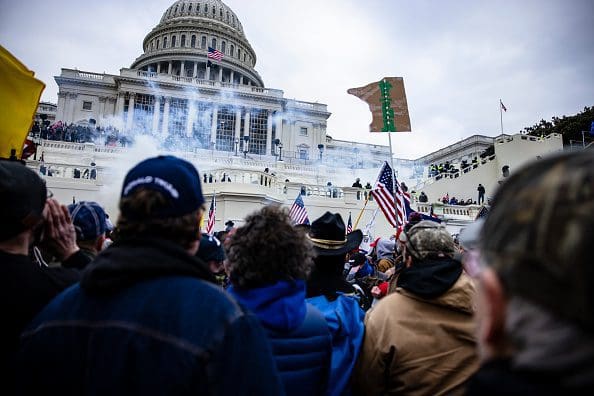
Democrats’ concerns about the future of American democracy run deep. Republicans cite immigration as one of the top issues facing the United States. Americans overwhelmingly say that the two parties can’t agree on basic facts.
The country’s deep political divide – rooted not only in policy differences, but in disagreements on the actual problems themselves – has thrown a wrench into traditional campaigning, forcing pollsters, consultants and campaign workers to reassess how they do their jobs. Gone are the days of uniting the electorate with broad themes of hope, change or making America great again. A large swath of voters are firm in their beliefs, and moving the needle is more challenging than ever.
“Persuasion, right now, is the hardest thing in politics,” said Michael Cohen, a longtime pollster and a lecturer at Johns Hopkins University. “You can reach a lot of people really quickly right now at relatively low cost. But voters have become very sophisticated and they know what they believe — or at least they think they know what they believe — and it’s very hard to move them off of something.”
There are still areas of agreement among American voters. For example, the cost of living and inflation routinely rank as top issues, regardless of voters’ political affiliations or identifications. Both Republican and Democratic candidates acknowledge the power of the economy as an issue.
Cohen said that means that campaigns now have to dig deeper into the electorate to find messages that can persuade voters. The good news, he argued, is that campaigners now have access to more tools and information than ever to help with that. And because those tools are relatively cheap, there’s less financial risk for campaigns in trying to reach voters beyond their political bases.
“Because we have low-cost access to information now – about what moves people and what people are reacting to – we now know what issues are animating voters and which issues they’re ignoring,” he said. “We’re getting closer to the voter and understanding the voter more rather than strategizing, testing and guessing.”
The Campaign “Funnel”
In a recent piece posted on LinkedIn, Brent Buchanan, the president and founder of the Republican polling firm Cygnal, described the country’s current political moment as the “great fragmentation” – a phenomenon in which “Americans no longer agree on what problems we’re even trying to solve.”
Campaigning in that environment, Buchanan told Campaigns & Elections in an interview, is more difficult than ever. There are very few overlapping issues that candidates and their campaigns can lean on to build broad coalitions, he said.
To compensate for that, campaigns now have to look at reaching voters as a “funnel,” in which campaigns gradually tailor their messages to cater to narrower and narrower groups of voters.
“It takes a lot more effort, because you have to layer a campaign funnel,” Buchanan said. “What is the broadest thing you’re going to talk about overall? That’s your broadcast message. Then you have to figure out, as you go down the funnel, what are the messages you need for narrower audiences?”
The key to persuading voters in the age of political fragmentation lies in emotion, Buchanan said. And that requires campaigning on principles rather than on policy.
“Principles live more at the emotional level. Policies live in logic,” he said. “That’s the way to get through these is to not have tons of policy points.”
Finding a “Sub-Issue”
During the 2024 presidential race, for instance, President Donald Trump’s campaign seized on transgender rights to attack his opponent, then-Vice President Kamala Harris. One ad that ran over 15,000 times during the campaign encapsulated that strategy by declaring that Harris was “for they/them,” while Trump was “for you.”
A post-election poll by the Democratic firm Blueprint found that, while transgender rights weren’t the top reason voters gave for not backing Harris, the survey found the issue still moved the needle. Many voters ultimately said that Harris was “too focused on cultural issues” Among swing voters who eventually chose Trump in the election, cultural issues slightly outpaced inflation as a deciding factor in their vote.
According to Cohen, the transgender issue wasn’t the main theme of the 2024 election, but a salient “sub-issue,” that resonated with just enough voters outside of Trump’s base to make a difference.
“Last year, during the campaign, the trans issue not only cut for Trump’s team, but for certain groups on the other side,” Cohen said.
Finding those sub-issues in 2026 and beyond, he said, is the ultimate goal of campaigns.
“Beyond the top level issues, there are a lot of other issues that can be salient in any election,” Cohen said. “And that’s what the campaign is about.”