Touch Grass: A Political Strategist’s Warning to His Party


Social media isn’t real life. Go touch grass. | Credit: zoranm via iStock
My career has taken an unexpected turn.
After working behind the scenes in Democratic politics – on the Biden campaign, in the Biden administration and, most recently, on the Harris campaign – I’ve become a political pundit who regularly goes on TV to talk about the news of the day.
Free from the constraints of a presidential campaign, there are now clips of me opining on everything from Gaza to the Trump administration’s push to deny visas to immigrants deemed obese. I often take those clips and turn them into social media content to amplify my message. And given the wide range of topics I’m asked about, I have a lot of insight into which tactics, messages and topics get traction and which don’t.
If the only data I had was what performed well on social media, I would assume that the best message Democrats should focus on are social and cultural issues, and that the best tone and approach is to be as combative as possible. I’ve pushed back on a host suggesting that all Muslims homophobic, that the Democratic Party is the party of antisemitism and that immigrants commit more crimes than native-born Americans – all patently false claims – just to name a few examples.
These are the clips that usually get the most views and engagement of anything I post on social media. With few exceptions, my videos about healthcare cuts, tariffs and inflation simply don’t perform as well.
This is a trap for Democrats running in 2026 and 2028. Social media engagement is not a metric for success, and it can be easy to confuse virality for genuine support.
Most polling shows the economy and cost of living to be the No. 1 issue for American voters. A January poll from The New York Times and Siena University found that 51 percent of Americans say that President Donald Trump’s policies have made life less affordable. Another survey from the Kaiser Family Foundation showed health care costs topping the public’s economic anxieties, with 32 percent of respondents saying that they are “very worried” about affording healthcare over other household costs like groceries. A winning political message speaks to those concerns.
So what’s the disconnect between what drives engagement and what drives winning? Those who are more likely to engage with political content online typically aren’t the same people who decide elections. On the contrary, the more engaged you are with political content online, the more likely it is that you’re not key to winning an election.
Put another way, the Facebook users who see clips of me railing against Islamophobia are partisans; they’ve already indicated that they want to see political content and so the algorithm delivers it for them. In turn, that content ends up either preaching to the choir or enraging the mob – not persuading the middle.
Persuadable voters are more likely to be “passive” news consumers, who wait for the news to come to them rather than seek it out. Sure, a few of them might stumble across a viral political video, but it’s not enough to drive social media engagement.
The lesson for campaigns is that social media metrics don’t – and can’t – drive your overall message. If your video on Medicaid cuts doesn’t get massive traction online, that’s fine. It’s still the right message. Keep hammering it home and find ways for it to reach the right audience.
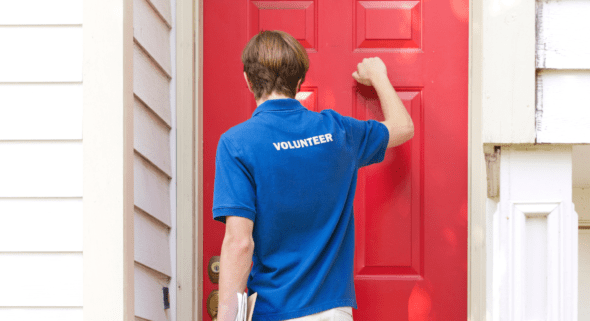
Social media is not real life. As the kids say, go outside and touch grass.
Mally Smith is a political strategist and commentator with over a decade of experience in policy, advocacy and electoral politics, including work in the Biden Administration and on multiple presidential campaigns. He is a regular television contributor, appearing on networks including BBC, CBS, Fox News and Newsmax, where he offers analysis on politics, policy and the national landscape.