The $10 Billion Midterms: New Forecast Shows Surge in Ad Spend
The 2026 midterm elections are expected to see more than $10 billion in political media spending, making it the most expensive non-presidential cycle in U.S. history, according to new projections released this week.
The forecast from Kinetiq Political Insights predicts total political media spending across broadcast, connected TV, digital, cable and radio falling at an average of $10.4 billion this year, up from about $8.9 billion in 2022. By comparison, the 2024 election cycle – when President Donald Trump and former Vice President Kamala Harris were on the ballot – saw about $11.2 billion in media spending.
The forecast underscores how media spending in U.S. elections has surged in recent decades. Michigan alone is projected to absorb over $1 billion in political advertising in 2026 – more than the entire country saw during the 2006 midterm cycle. The Atlanta area is expected to be the most expensive media market this year, with an estimated $591 million in political ad spending, according to KPI’s forecast.
The forecast is based on three independent signals: market-level modeling from the most competitive states, scaled nationally; historical political media spending trends; and fundraising data modeling campaigns’ capacity and ability to spend. The projections account for both a “bull market,” in which spending could run as high as $11.8 billion, and a “bear market” that could see lower spending around $9 billion.
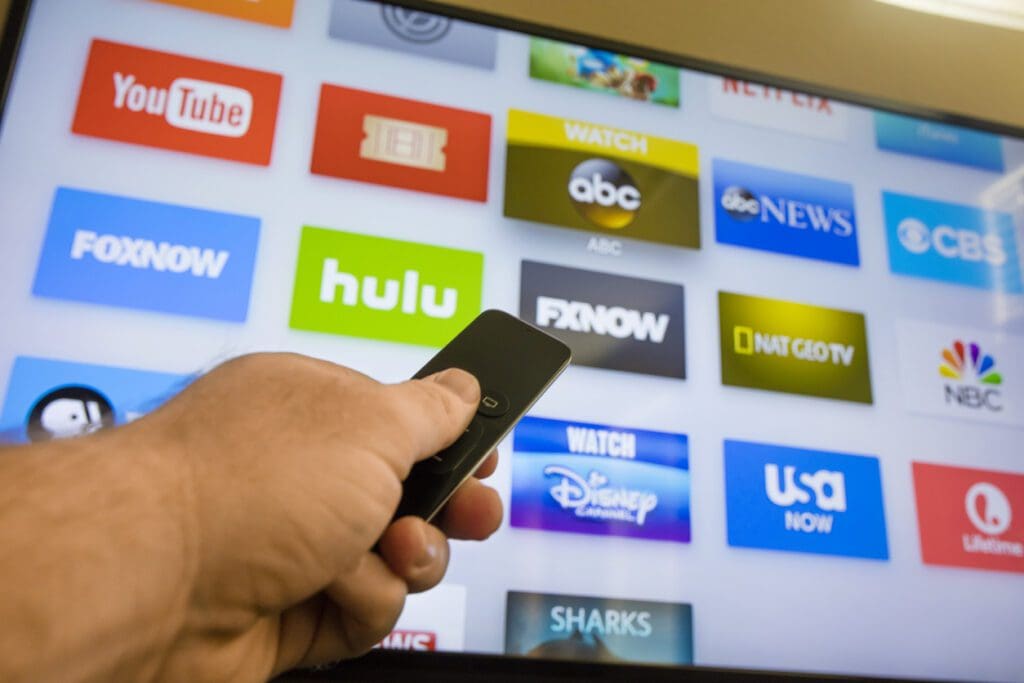
While broadcast television is still projected to see the highest spending, CTV is where the growth is. Political advertisers are expected to spend an estimated $2.7 billion on streaming in 2026 – a 122 percent increase over 2022 levels and a 7 percent increase over the $2.5 billion spent in 2024. It’s expected to be the first time that CTV crosses 25 percent of total political ad spending.
“In 2018, CTV was a rounding error in political media. In 2026, it is a $2.7 billion channel,” KPI’s report reads. “No medium in political advertising history has scaled this fast.”
Broadcast TV and cable, meanwhile, are projected to see a 13 percent and 10 percent drop in spending since 2024, respectively. Political spending on radio is collapsing even faster, with an estimated $300 million in projected political spend in 2026.
There are a handful of variables that could affect final political ad spending for the cycle. A $50-100 million issue advocacy push by AI companies, for example, could drive up the final cost.
At the same time, a pending decision by the Supreme Court in a case centered on coordinated spending limits could give party committees access to cheaper rates currently reserved for candidates. According to KPI, that could reduce effective political ad costs by 15-20 percent and, in turn, increase total advertising volume.
There’s also the dynamic nature of the House map. As some states pursue mid-decade redistricting efforts, newly competitive districts could come into play, with each one adding about $15-25 million in potential political ad spending, according to KPI’s forecast.
Another unknown: media spending in state legislative elections. KPI’s forecast pegs its 2026 spending projection for state legislative races at $729 million – five times higher than 2018 levels – with seven states driving that growth: Florida, Texas, Illinois, Michigan, North Carolina, Pennsylvania and Virginia.