NRSC v. FEC: What It Means for the Campaign World
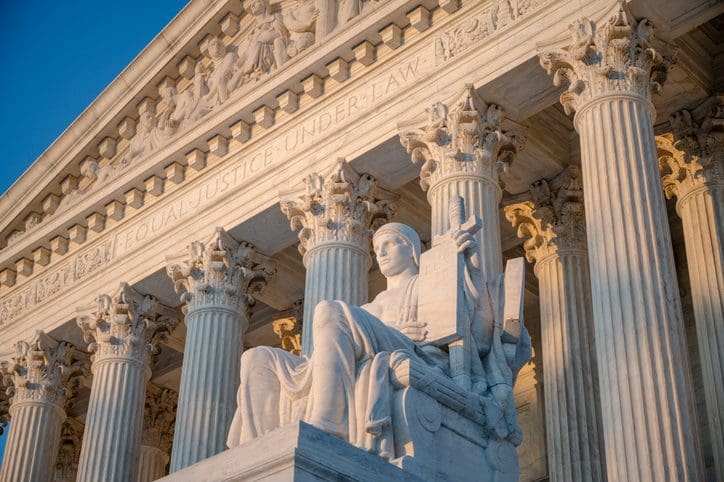
When the Supreme Court handed down its ruling in National Republican Senatorial Committee v. Federal Election Commission this summer, it sent a shockwave through the political world just months before the 2026 midterm elections.
In the weeks since then, party officials, campaign staffers, consultants and compliance professionals have been racing to figure out what exactly the decision means for the business of politics and how they can gain a competitive advantage in a world without limits on coordinated party spending.
Campaigns & Elections convened two panels this week with leading fundraising and campaign finance experts from both parties to discuss how political pros are navigating this new terrain. (You can find the Democratic panel here and the Republican panel here). Here are four takeaways from those conversations:
It’s Not an Instant Game Changer
NRSC v. FEC may have been the most consequential campaign finance decision from the Supreme Court in more than 15 years. But don’t expect it to turn the political world on its head just yet.
With the November elections now less than 90 days away, there’s not much time for campaigns and committees to adjust to the new realities brought about by the court’s ruling. In other words, “it’s really hard to stand up a program and to completely shift and change a program 90 days from an election,” said Rachel Jacobs, a partner at Elias Law Group and general counsel to the Democratic Congressional Campaign Committee.
“I think you’ll see some changes this cycle, but I think the full impact of this decision will truly be felt in 2028 and then in 2030,” Jacobs said.
That’s not to say that nothing will change this cycle. Immediately after the Supreme Court handed down its ruling, the NRSC announced that it would sunset its traditional independent expenditure unit and become the coordinated spending hub for GOP Senate campaigns.
“This case was going on for so long,” said Jessica Furst Johnson, a partner at Lex Politica and former general counsel for three Republican national political committees. “Like if you were caught by surprise by this case and the outcome, like you weren’t really paying attention.”
Super PACs Aren’t Going Anywhere
Defenders of the Supreme Court’s ruling have argued that the decision effectively puts power back in the hands of political parties after a decade and a half of super PAC dominance. But that’s not necessarily the case, according to multiple panelists.
That’s because super PACs still allow large donors to contribute unlimited amounts of money and offer earmarking flexibility that party committees just can’t match. Meanwhile, donors are still subject to federal limits on how much they can give to party committees.
“Super PACs have a couple competitive advantages that the court opinion doesn’t disturb,” Brian Svoboda, a partner at Ashurst Perkins Coie and a 29-year campaign finance veteran, said. “One is they’re able to raise unlimited money regardless of source, and that’s attractive to a donor who wants to give beyond what the party limits would be. The second is they are actually able to accept earmark contributions for independent expenditures.”
Super PACs also offer something that party committees don’t: messaging independence.
“At the end of the day, there are some people that open super PACs – whether it’s for the right reasons or not – for a candidate, because they want to control the message,” said Bradley Crate, the president and co-founder of Red Curve Solutions, which manages FEC compliance and treasury operations for committees across the country. “And sometimes it’s because they don’t like the message of the national party, what they’re trying to do for their person.”
State Parties at a Crossroads
While the decision in NRSC v. FEC paves the way for unlimited coordinated spending between party committees and candidates, the ruling isn’t necessarily a big boon for state parties and legislative candidates.
“I think there’s either no change or it hurts the down ballot,” Crate said. “I don’t think there’ll be an influx of funds to state parties to support state legislative candidates because of this ruling.”
Democrats worried aloud about state parties losing their existing advantages – lower mail rates and coordination flexibility – and what that could mean for the campaigns of down-ballot candidates.
“It’s difficult to see a world in which the NRSC case is good for state parties, because it diminishes a competitive advantage that they had relative to other committees, which was the ability to spend on a coordinated basis under lower mailing rates,” Svoboda said. “This is going to take a couple cycles to sort out…with the state parties because they’re going to have to find their space and their comparative advantage.”
Expect More Campaign Finance Litigation
NRSC v. FEC may be the latest Supreme Court case to alter the rules of campaign finance. But both Democrats and Republicans said that it’s unlikely to be the last.
“I would guess that our Republican brothers and sisters are feeling their oats,” Svoboda said. “And there’s some logical questions from their point of view that the court’s decision would raise, which is that if the political parties present an attenuated risk of corruption and can make unlimited coordinated expenditures with their campaign, then why can’t some other sort of private association, like, for example, a PAC or some other sort of entity?”
On a similar note, Svoboda said, “what’s the continued basis for the soft money fundraising and spending restrictions on national political parties?”
Crate, meanwhile, said there are other issues that could come before the court in a post-NRSC v. FEC world. After all, he said, the Supreme Court’s decision marks “the first fall of” a spending limit.
But while challenges to other limits are sure to be raised in the future, Crate said, it’s not likely to happen anytime soon.
“I do believe donor limits are the next thing that people are gonna go after,” he said. “I think there’s gonna be another fall of a limit. And then there’s real conversations about super PACs and campaigns and how that works. But is that in the next five to 10 years? I doubt it.”