Democrats Won in 2025. They’re Still Not Ready for 2026.

They hammered opponents on affordability, showed what fighting looks like and adapted to today’s information environment better than ever before. But underneath a seemingly good year, risk is building: if the party doesn’t adjust to how artificial intelligence and digital platforms are transforming campaigns and voter behavior, last year’s victories won’t be enough to carry them through 2026.
Zohran Mamdani showed what an always-on, creator-native campaign looks like, then won New York City by living in people’s feeds—right down to a citywide scavenger hunt. According to Resonate’s social listing database, his campaign racked up over 650 million views across social platforms in the month before Election Day, coming in just ahead of “The Daily Show.”
Crucially, Mamdani didn’t ditch traditional organizing; he integrated a huge canvassing operation into a wider content strategy that reached far beyond voter lists. Mikie Sherrill did her own version in New Jersey, marrying saturation with a crisp affordability promise (“freeze the rates”). Abigail Spanberger won Virginia by keeping a relentless focus on daily-life economics, particularly in the context of many ex-government employees, recently out of work. .
These campaigns all succeeded in an increasingly decentralized media ecosystem, where it’s not enough to make great ads. You have to create content that other people clip, remix and—most importantly—riff on. AI was already a background character in 2025, from President Donald Trump and Andrew Cuomo posting outrageous AI-generated content to campaigns quietly testing AI for script writing, video editing and audience research.
So what world do campaigns need to prepare for next?
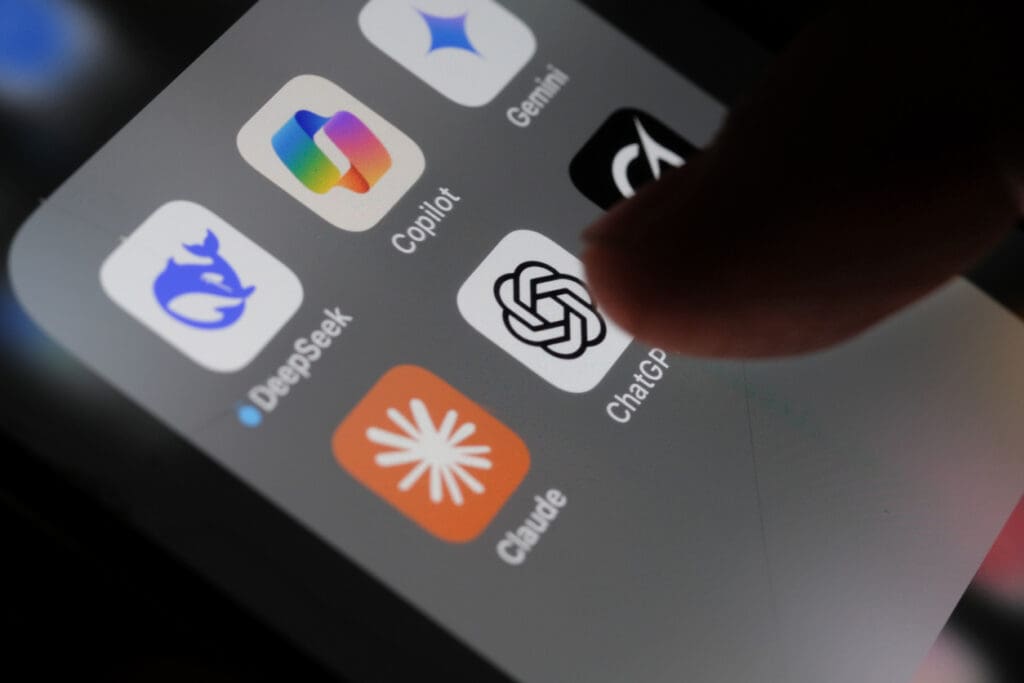
The disruptive potential of near-human AI is already obvious enough to force a rethink. AI systems that can act on their own are poised to upend the labor market, especially entry-level work, with real implications for how voters experience the economy. Today’s best models can already persuade people nearly as well as humans—and they’re rapidly becoming the interface between people and information.
Related
A July AP-NORC poll found that 60 percent of Americans use AI to search for information at least some of the time. Among people under 30, it’s 74 percent. Mark Cuban recently predicted that Americans will simply ask ChatGPT who they should vote for. The New York Times documented the rise of right-wing chatbots designed to give users answers that conform to their ideological priors. Meanwhile, the machine-learning systems behind platforms like TikTok keep evolving, quietly shifting how we discover political content and what goes viral.
If Democrats think the main lesson of 2025 is “make more vertical videos,” they’re going to miss what’s coming.
The days of campaigns crafting a perfect message and microtargeting it to exactly the right voters are ending. Campaigns already aren’t reaching enough people via phone, text or door-knocking. As more people rely on AI systems and algorithmic feeds to mediate information, campaigns will have even less direct control. With few sources of information they can trust, voters will look to trusted messengers to share information. These third-party messengers will play a critical role in a campaign communications strategy. Campaigns need to make their message easy to grab and to share.
To deploy the sheer scale of content and show up in enough places, campaigns will also have to rethink their staffing. That likely means leaner teams that use “AI agents” to handle much of the routine work: drafting scripts, cutting videos into different formats, scanning local news, flagging emerging narratives. Staff can create new narratives, support volunteers and influencers and post their own content.
Finally, campaigns will need a much closer ear to the ground, tracking how voters’ priorities are shifting in real time and how they consume information. AI models now make it possible to take massive amounts of qualitative feedback—doorstep conversations, house parties, open-text survey responses, social comments—and turn it into something intelligible and actionable. Done right, that could make candidates more responsive to the electorate, not less.
If Democrats treat 2025 as the finish line rather than the starting gun, they’ll squander the real lesson of this moment. The campaigns that win the next decade won’t just crank out more content or slightly better ads—they’ll build lightweight, AI-enabled machines that listen at scale, translate what they hear into narratives that feel true in people’s lives and empower thousands of everyday messengers to carry those narratives into their own communities. That’s not a marginal upgrade to the old playbook. It’s a different theory of how campaigns work.
The question for Democrats is whether we’re willing to reinvent ourselves for the world voters are actually moving into—or keep optimizing for a world that’s already gone.
Josh Hendler is a technologist and campaign strategist. He led technology for the Democratic National Committee and worked across multiple presidential campaigns.
Betsy Hoover is Founder and Managing Partner of Higher Ground Labs, a firm that invests in political technology innovation.