How YouTube is Weighing on the Democratic Senate Primary in Michigan
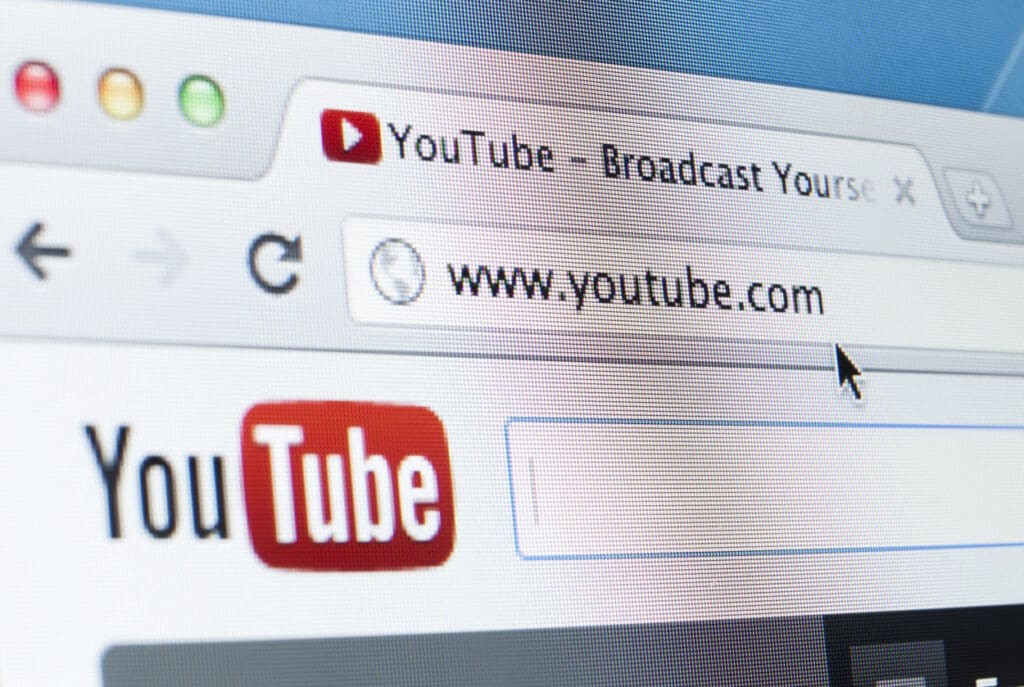
YouTube is the most-used social media platform among U.S. adults, according to survey data from Pew Research Center. Credit: (PHOTO CREDIT: EKIN KIZILKAYA)
If Abdul El-Sayed wins the Democratic Senate nomination in Michigan on Tuesday, he’ll have a chorus of positive online attention to thank, at least in part, for the victory.
A new analysis from startup ClarifyAI offers a sweeping view of how the contentious primary between El-Sayed and moderate Rep. Haley Stevens (D-Mich.) has played out on YouTube. Positive or supportive narratives about El-Sayed have proliferated on the digital video giant over the past month, thanks in part to a robust network of creator surrogates and intensifying national attention on the race.
Stevens, meanwhile, saw a spate of videos portraying her negatively in that same timeframe, according to the analysis. Between late June and late July, ClarifyAI tallied some 877 negative or oppositional YouTube videos mentioning Stevens, while just 277 featured positive narratives or messages about the candidate. El-Sayed, on the other hand, saw 1,115 positive videos on YouTube compared to 577 negative ones.
“The overall finding here is that there was a real structural advantage that El-Sayed had in this period of time in the positive lane of communication with voters. His positive narratives were getting a lot more reach and frequency than Stevens’ positive messages,” Andrew Eldredge-Martin, the CEO of ClarifyAI’s parent company Ground Truth AI, told Campaigns & Elections.
On the flip side, Eldredge-Martin said, “Stevens is having trouble getting her positive message out in the environment.”
ClarifyAI’s breakdown of online narratives in the Michigan Democratic Senate primary relied on a multi-modal artificial intelligence to watch and analyze 2,846 YouTube videos posted between June 29 and July 27 that mention Stevens, El-Sayed or both. Those videos, according to the analysis, account for more than 47 million total views.
Overall, El-Sayed is the candidate receiving the most attention – for better or for worse. Narratives about his candidacy racked up 29.3 million views across 1,692 YouTube videos in the study period, while those mentioning Stevens received 17.7 million views across 1,154 videos.
Just 34 percent of videos mentioning El-Sayed featured negative narratives or messages, the analysis found, compared to about 76 percent for Stevens.
It’s unclear exactly how much those videos swayed voter sentiment. But polls have shown El-Sayed pulling away from Stevens in recent months. An Emerson College survey released last week, for example, found the progressive former public health official leading Stevens in the primary by a 16-point margin.
The narratives on YouTube that have boosted El-Sayed have focused primarily on his progressive policy positions and politics: his support for Medicare for All, the role of government in public welfare and a push for systemic reform, according to ClarifyAI’s analysis.
At the same time, one of El-Sayed’s biggest liabilities – his position on the Israeli-Gaza conflict – has also proven to be one of his best narrative assets. While much of the negative YouTube content about El-Sayed has focused on his anti-Israel positions, the topic also anchors his single most-viewed positive video: a post from shortform video channel Breezy Politics that features El-Sayed defending his stance on Israel and hammering the American Israel Public Affairs Committee’s efforts to influence the Michigan Democratic Senate primary.
Stevens’ greatest narrative liability, on the other hand, appears to be accusations that she represents corporate and special interests, according to ClarifyAI’s analysis. She has also seen a spate of videos highlighting her polling deficit in the Democratic primary.
That’s not to say that negative narratives about El-Sayed aren’t breaking through, Eldredge-Martin said. But so far, at least, Stevens has struggled to break through on a more positive front. And that may be more important than ever, Eldredge-Martin said.
“There is a little bit more of a mixed picture where Stevens is really breaking through with some of her campaign’s negative narratives about El-Sayed, but they haven’t been able to do the same thing on the positive side,” he said. “It could be that finding a way of breaking through with your positive message is really the core of what you need to do these days.”