In Politics, Blocking and Tackling Never Go Out of Style

Former House Speaker Tip O’Neill (D-MA) famously said back in the day that “all politics is local.”
He was right—with an emphasis on “was.”
Now, largely due to the dramatic and ongoing changes in the information ecosystem that are altering the very nature of original content, its distribution and consumption, the concept has been flipped on its head. Increasingly, all politics is national.
At the same time, some things remain as true today as they have ever been. Abraham Lincoln long ago advised dividing your district into units, then making a list of the voters within the unit. After that, bombard the undecideds with information to persuade them to your side while also assuring your supporters get to the polls. We have changed options on how and when you can cast a vote, but the advice is still solid.
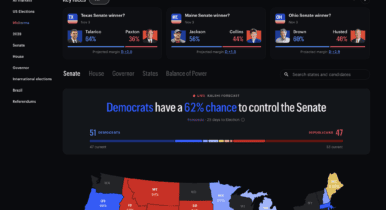
Lest anyone doubt the wisdom of continuing to focus on voter identification, contact and turnout, just look back at the last midterm held in 2022. The prevailing wisdom was that Democrats were staring down the barrel of a Republican landslide. President Joe Biden was unpopular. Republicans were seen as more able to address the No. 1 issue: the economy. We Republicans were approaching giddiness. No less a pundit than Charlie Cook tweeted on Election Day that turnout was heavy, and he did not see how Democrats had enough time to change things.
As we know, the actual results in 2022 were far short of a Red Wave. Democrats held the Senate, while Republicans narrowly gained control of the House of Representatives. What happened? Were all the polls wrong? It says here that the results reflect the Democrats doing a better job of identifying and turning out their lower-propensity base voters.
Related
How is this thesis justified? Well, unless you decide every single pre-election poll measuring what was of concern to voters was off the mark, the data from the exit polls was startling. While the economy, jobs and inflation remained the top issues, and Republicans did well among those who felt this way, the No. 2 issue among those voting Democratic had to be a shocker: abortion.
Among those rating abortion as their top issue, Democrats swamped Republicans. Only one reasonable explanation exists. Democrats identified low- and mid-propensity voters who cared about abortion, swamped them with hyper-targeted messages, convinced them the election was a referendum on abortion and then made sure they cast a ballot. They found friendly turf and acted accordingly. Best of all for them, they did this mostly flying under the radar, communicating within the modern, digitally dominated, information ecosystem.
That brings us to 2026. The consistent feature of midterms is that the party in power has a tougher time getting their lower-intensity voters to cast ballots. They simply sit things out. My firm focuses on creating and executing plans for the delivery of messages to hyper-targeted audiences via digital platforms. As such, I will leave it to the data gurus to search out the particular issues and messages that could motivate and activate different segments of the Republican coalition that otherwise would likely sit things out.
Once these experts have worked their magic, the blocking and tackling begin in earnest. Traditionally, this has meant door knocking, phone banking and direct mail. In recent years, texting and email have been added to this mix. Smart campaigns on both the left and right now are also heavily invested in get-out-the-vote “social pressure” digital messaging, generating remarkably favorable results.
Social pressure GOTV hyper-targeted digital advertising is organized around the concept of accountability. Its messages tap into an individual’s desire for approval and to avoid being viewed negatively by one’s peers. Energy is given to the fear of a negative outcome on Election Day, which voters either did or didn’t do their part to prevent. The results prove the hypothesis. It will indeed drive low- or mid-propensity voters to actually vote.
As good an example as there is of inserting digital into the above-described activities comes from my home state of North Carolina. In Pender County, Republicans invested nearly their entire paid advertising budget into “carpet bombing” low- and even no-propensity Republican voters with social pressure ads, while their volunteers knocked on doors and made calls to this same audience. Thanks to the intrinsic strengths of highly targeted digital advertising, this worked like gang busters. Nearly 86 percent of their target audience cast ballots.
Fortunately, Team Trump, the National Republican Congressional Committee, National Republican Senatorial Committee and Republican National Committee completely grasp the challenge and opportunity.
These national Republican groups have been plotting their 2026 turnout strategy since November 2024. The focus is on the battleground Senate seats and the most competitive congressional districts. Building upon the lessons learned in 2024, they are increasing their investment in social pressure digital messaging, precisely targeting the low-propensity voters Republicans simply must get to turnout.
Republicans are unlikely to prevent a “Blue Wave” if our focus is restricted to the 30 or so congressional districts the NRCC is wisely giving priority to, or even the handful of states that will decide who controls the Senate. Republicans need to attend to fringe districts that could also flip in the wrong direction in a wave election.
We must also drive this concept and technology down to the level of key state legislative and state senate districts. This is where it will be determined who is in the majority and, often, if there will be a supermajority in multiple states.
As 2022 demonstrated, even when you are facing a headwind, if you are precise and professional in the conduct of your voter identification, contact and turnout activities, you can defy the prognostications of the experts.
But it has to be done right. More and more, doing it right translates to bombarding your targeted voters with highly targeted digital messages. For Republicans, doing it right has never been more important.
Andy Yates is the founder and CEO of RYE Digital Strategies, with more than 22 years of experience advising political campaigns, public affairs organizations, and businesses nationwide.