LGBTQ+ Candidates Face Increased Threats, New Study Finds
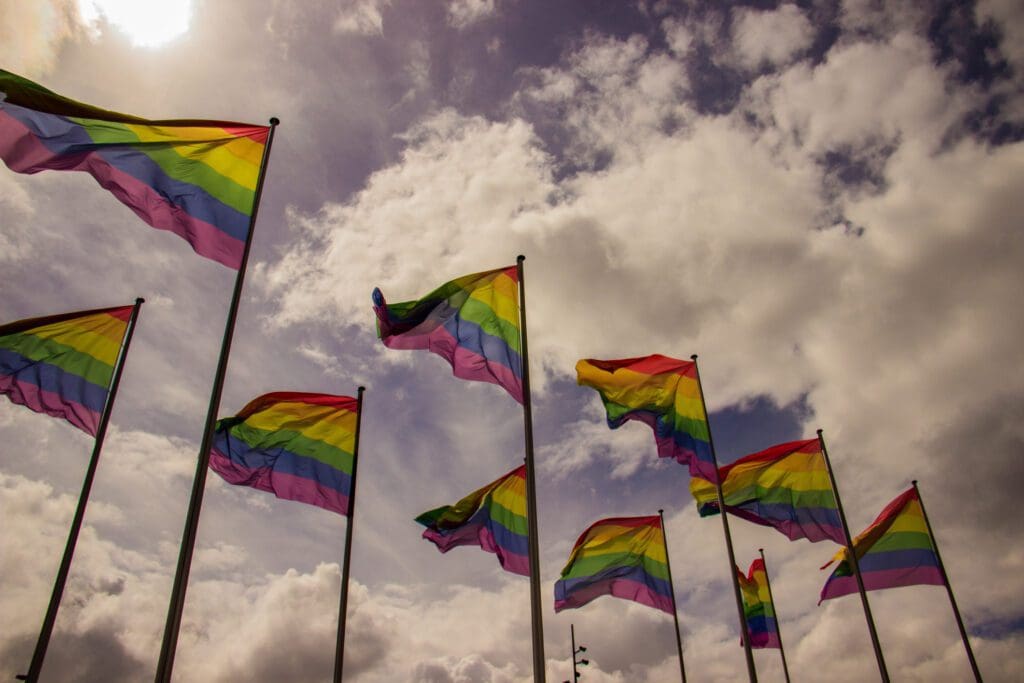
A new report is shining a light on how threats and political violence have become pervasive in the campaigns of LGBTQ+ candidates.
“Threats on the Trail,” published by the LGBTQ+ Victory Institute and Loyola Marymount University, draws on surveys of 215 LGBTQ+ candidates across 42 states, Puerto Rico and Washington, D.C., who ran for office between 2023 and 2025.
Here are five takeaways from the report:
The Threats Are Real
Nearly 9 in 10 candidates worried that running openly as an LGBTQ+ person would increase their risk of harassment or attack — and for most, those fears were quickly confirmed.
About two-thirds encountered in-person harassment during their campaigns, while nearly 8 in 10 faced it online, often on a weekly basis. The threats didn’t stop at harassment, either: one in three candidates received death threats through digital platforms, and one in seven experienced them in person.
Some incidents were severe. One candidate described a neighbor “shooting up” their home “following my fight for trans rights.”
Fear is Changing How Candidates Campaign
Safety concerns aren’t just rattling nerves — they’re reshaping strategy in real time.
More than half of respondents said they adjusted their campaign activities because of safety fears, with nearly one in five describing the impact as significant. Some candidates scaled back door-to-door canvassing and social media engagement, skipped public events and avoided posting real-time updates while in the field. Some stopped going out in public entirely after being threatened.
Despite all of this, fewer than one in ten actually hired private security — leaving most to rely on informal coordination with local law enforcement or simply absorb the risk.
The Mental and Emotion Toll is Severe
Nearly two-thirds of respondents said the attacks they experienced negatively affected their mental health, with one in ten reporting a severe impact.
Candidates described developing hypervigilance, seeking counseling and carrying lasting PTSD from their experiences on the trail. One candidate put it plainly: the hardest part isn’t the hate itself — it’s the “lack of support in the face” of it.
The report frames mental health care not as a peripheral concern but as a form of democratic infrastructure, arguing that when LGBTQ+ leaders are left without adequate support, the consequences ripple outward and ultimately threaten the pipeline of representation itself.
The Double Standard is Exhausting
Beyond overt threats, candidates described a quieter burden: the sense that they were held to fundamentally higher standards than their peers.
More than half said they faced a double standard compared to non-LGBTQ+ candidates, with 60 percent reporting their qualifications were scrutinized more closely, 59 percent saying their families were more heavily examined and 54 percent noting their appearance received more attention.
One candidate described the feeling bluntly, saying LGBTQ+ candidates have to be “200% better in every way” just to compete.
Resilience Can’t Be the Whole Answer
Despite everything, nearly all respondents said their LGBTQ+ identity strengthened their candidacy, because it helped deepen their empathy, resilience and connection to community.
In some cases, attacks backfired, generating media attention, energizing donors and rallying supporters. But the report argues that resilience alone isn’t a solution. Protecting LGBTQ+ candidates — and by extension, democratic representation — will require sustained investment in safety infrastructure, trauma-informed mental health services and affordable resources that aren’t limited by wealth or personal networks.