The 2026 Midterms Are Where AI Meets the TV Ad


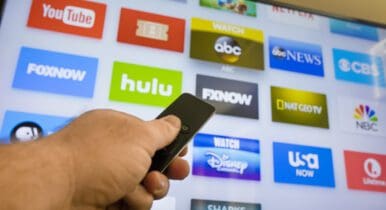
Television has been undergoing a transition from linear broadcast channels to streaming services for over a decade, with recent research showing that 43.8 percent of U.S. TV viewing is now via streaming on connected TVs.
This transition has fundamentally changed how advertisers approach TV as a marketing channel. The broad brush approach of linear TV advertising has been replaced with the precise audience targeting, segmentation and budget control that’s typical of other digital channels such as social media.
But unlike social media, display and other digital marketing channels, TV ad production costs and lead times have remained a prohibiting factor. While political campaigns could feasibly run multiple CTV ad campaigns with specific messaging targeting specific voter demographics, this has rarely been the case. Instead hyper-targeted ads have largely been the domain of social media, while messaging within TV ads has remained broader and less specific.
The arrival of AI could upend this paradigm. AI-powered production platforms have collapsed the cost and time of producing TV ads. Meanwhile, the explosive growth of ad-supported streaming has created huge amounts of inventory that campaigns can buy in precise, targeted increments.
This convergence has real implications for how campaigns use TV ads, particularly in down-ballot races that have historically been priced out of the medium entirely. And this year’s midterms will be the first election cycle within this new environment.
When Production Stops Limiting Strategy
AI ad creation compresses production timelines from weeks to hours. A campaign that previously built two or three hero spots for an entire cycle can now generate dozens of variations quickly and without a large team.

In commercial advertising, brands have been using this capability to run multiple creative variants against live audiences, measure performance and adjust mid-flight. The same workflow is now available to political campaigns. You can run an economic message with small business owners and a healthcare argument with seniors at the same time, rather than guessing which frame to bet the whole campaign on. Spanish-language and English versions no longer have to be sequential decisions driven by budget.
What’s also changed is the ability to iterate mid-cycle. A message tied to a breaking issue doesn’t have to wait weeks for a production company to turn around a new spot. By that point, the moment has often passed. That responsiveness is new for television, and it matters in a campaign environment where the news cycle doesn’t pause.
Most political campaigns are just arriving at this capability. How quickly operatives adapt, and whether they have the strategic infrastructure to use creative volume effectively, remains to be seen.
The Down-Ballot Opening – and Its Limits
The campaigns where this matters most are not the high-profile Senate races with eight-figure media budgets. They’re the ones that previously couldn’t afford television at all.
State legislature races, county campaigns and local contests have historically been locked out of TV. A candidate running for a competitive state assembly seat with a $200,000 total budget often couldn’t justify the production cost for two spots. Television ads simply weren’t viable for them.
CTV buying, combined with lower production costs, changes that math. Entry-level ad production now runs in the hundreds of dollars, making sustained presence on streaming platforms accessible to down-ballot campaigns for the first time.
That access doesn’t automatically translate into results. The campaigns that struggle most tend to make the same mistakes: too small a budget spread across too large a geography, with messaging that tries to cover too much at once. A modest spend concentrated in a specific area, with a clear and consistent message, outperforms a diffuse one almost every time. More participation in TV is the likely outcome of lower barriers. Knowing what to say when you get there is still on the campaign.
More Ads, Same Fundamentals
The risk that comes with lower production costs is overproduction. When generating a new creative variant takes minutes instead of weeks, the temptation is to generate more of them. But volume without strategic coherence tends to fragment a campaign’s message rather than strengthen it.
What commercial CTV advertisers have found, and what political campaigns are likely to discover, is that performance differences between ad variants come down to message clarity more than anything else. The ads that perform are simple, direct and run consistently in the same households over time. Fifty versions of a muddled message are still a muddled message.
Measurement adds another layer of complexity. CTV offers more attribution than linear ever did, including website visits and audience matching. But it isn’t a performance channel the way social media is. Feedback loops are slower, and the data is noisier. In a compressed cycle, there’s real pressure to optimize for whatever you can measure right now rather than what TV has always been best at, which is building trust over time.
This Is a Behavioral Shift, Not Just a Technical One
The 2026 midterms will be the first cycle where AI-powered TV ad production is available at scale. But availability isn’t adoption, and adoption isn’t effectiveness.
For a first-time TV advertiser in a down-ballot race, the strategic choice is to start narrow, establish who you are before making the case for where you stand and keep the message consistent with everything else the campaign is running. That sequencing – introduction before argument, familiarity before persuasion – is what TV has always been best at. The difference now is that it’s accessible at a scale that makes sense for a local race.
Whether any of this changes how campaigns think about TV depends on whether strategists are willing to rethink a medium they’ve treated the same way for decades. The tools are ahead of the habits. Closing that gap is where the actual advantage will come from in 2026.
By David Naffis is the co-founder and CEO of Adwave, a TV advertising platform built for small businesses, organizations and local campaigns.