A New Study By Audacy Shows Rush-Hour Voters Could Help Swing the ’26 Midterms

Every cycle has their defining voter group. Think NASCAR dads from the early 2000s, Shy Trump voters from a decade ago or MAHA Moms in 2024.
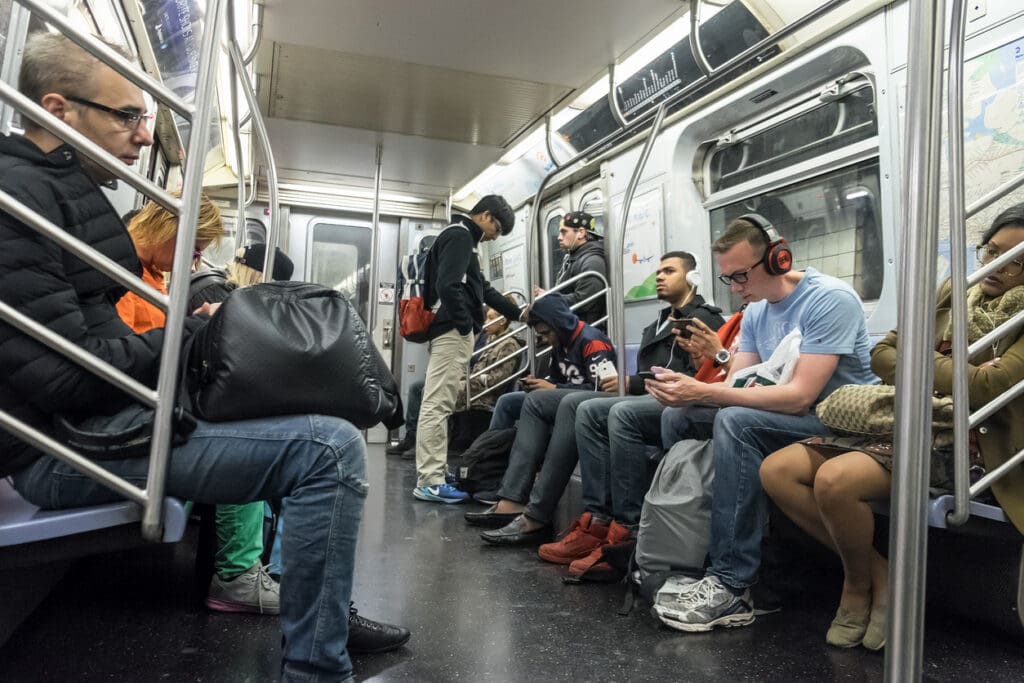
This cycle could be defined by Rush-Hour Voters. The prediction stems from a recent study by Audacy, a leading audio content and entertainment company, which found that commuters across the political spectrum are most concerned about the economy and are more likely to be registered to vote than non-commuters. This overlap is even stronger for homeowners with families who are commuting to work.
“Our polling found that 59 percent of commuters said they were likely to vote and most concerned about the economy — five points higher than non-commuters,” said Ray Borelli, Audacy’s SVP of Research and Insights.
“When it came to likely voters who own their home and have children, that number increases to 73 percent saying the economy is their No. 1 concern.”
The good news for campaigns trying to persuade voters on the economy this midterm cycle is that commuters are highly targetable through audio advertising on platforms like Audacy.
Moreover, audio channels like podcasts and AM/FM radio are also considered some of the most trustworthy sources of information. So political marketers through Audacy’s platform can access a captive audience listening to a channel they trust with a message on the economy.
Related
Talk about meeting a voter where they are: commuters now have higher gas prices to contend with while driving more frequently to work. Among Audacy’s respondents, 78 percent said they’re on the road to work at least twice a week while 45 percent are driving in five days a week.
As inflation persists, commuters will be forced to make difficult tradeoffs like cutting back on entertainment, streaming subscriptions, dining out, and other nonessential spending sooner and more aggressively than other Americans. That’s why free audio channels like Audacy are gaining traction with campaign media buyers.
“We’ve seen a growing adoption by campaigns, even down-ballot candidates who are trying to reach local voters as part of their media mix or to extend the reach of a TV buy,” said Borelli. “As inventory gets scarce on CTV and digital, we have the ability to absorb last-minute spending on news or entertainment programming. But we can also start today if campaigns want help planning targeted buys in the lead up to November.”
Now, the number of listeners who report being likely voters is high for AM/FM radio, a channel that reaches more midterm voters than all linear and digital video competitors. Among those radio listeners, 77 percent say they’ll be voting in the 2026 midterms compared with 74 percent for all respondents.
But the number gets even higher for podcast listeners: 79 percent of podcast fans said they planned to vote in the upcoming midterms, according to Audacy’s survey, which was conducted with a sample size of 1,000 registered voters nationally by YouGov.
Some high-profile campaigns have already tapped into Audacy to reach this captive audience of likely voters. In the last midterm cycle, now-Pennsylvania Sen. John Fetterman (D) shifted 14 percent of his media budget to radio, which extended his TV reach by 10 percent (676,000 more unique voters). Ultimately, he defeated Republican Mehmet Oz by just 263,752 votes.
Audio ad dollars stretched even further in Nevada that cycle. Challenger Joe Lombardo (R) defeated sitting Gov. Steve Sisolak (D) by 13,965 votes after layering on AM/FM radio to the campaign’s media mix of CTV and broadcast/cable. That addition of audio helped the Republican reach nearly 100,000 more voters who hadn’t been exposed to the campaign’s TV or CTV ads, according to Audacy.
In a cycle where the defining issue is the economy, and races will be decided by close margins, the most effective channel for many campaigns will be audio. Campaigns that start getting their ads up now will be best positioned to influence the voters who ultimately decide the outcome.
Want to learn more about reaching commuters through Audacy? Reach out here.