
The Empty Room Problem: Why Political Advertisers Are Done Paying for TV Ads No One Watches


CTV is table stakes for advertising. A new wave of programmatic attention tools is forcing an uncomfortable reckoning, and political advertisers are leading the charge.
Political advertising has always operated at a different tempo than consumer brand campaigns. The feedback loops are faster, and the stakes are monumental. When poll numbers shift overnight or a viral moment occurs, your media strategy needs to capitalize on that information immediately. Actionable insights in real-time are crucial. A post-campaign report delivered three weeks after the buy is not a strategy. It’s an autopsy.
This is why political advertisers have emerged as aggressive early adopters of real-time targeting and optimization, especially on the supply side. They focus on attention-targeting and appointment-viewing CTV buys. They’ve figured out something the broader ecosystem has been slow to reckon with: You can run a perfect TV ad campaign, optimized for viewability and completion rates, and still be talking to an empty room.
What Viewability Was Never Actually Measuring
CTV’s dominance isn’t really in dispute anymore. At least 48 percent of TV viewership now happens on connected platforms, ad spend is projected to exceed $36 billion in the US this year, and 89 percent of American households stream CTV.
The adtech response to all of this has been to double down on viewability: did the pixels render, did the ad play, did it complete? These are legitimate signals, but they measure the television, not the human sitting – or not sitting – in front of it.
A 100 percent viewable, 100 percent completed impression can still run to an empty room, to a TV left on in the living room while everyone’s in the backyard, or to an audience that started cleaning up the kitchen the moment the break started. The ad played, the impression counts and by every standard metric, the buy worked. The message reached no one.
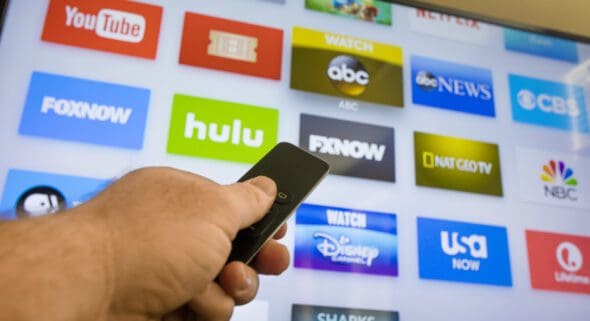
For a consumer brand running awareness at scale, this is campaign inefficiency. For a political campaign trying to move persuadable voters in a specific DMA in the final three weeks before an election, it’s a fundamental failure — reach without attention is just noise, and noise doesn’t turn out voters.
Speed as a Forcing Function
Consumer brand campaigns often operate on planning cycles measured in quarters, but there’s a lot the broader industry can learn from the real-time nature of politics. Political campaigns run on a minute-to-minute, hour-to-hour news cycle. When an opposition ad drops at 9 a.m. and tracking numbers show movement by 3 p.m., you need to adjust media investment — and sometimes creative — by morning. There is no time for a post-campaign report.
Appointment-viewing buys and attention-targeting deals share the same intent: put the ad in front of someone who is actually watching. These approaches are changing CTV’s value for politics. Instead of buying broadly and hoping for attention, campaigns can target inventory that typically gets high-attention co-viewing: households gathered in the living room, watching high-quality content on the primary screen. That shift is changing what CTV is worth to political advertisers.
The research backs this up. The Thinkbox Context Effects Study found that ads in the living room produced 176 percent better recall than the same ads seen elsewhere in the home, and co-viewing increased recall by 23 percent. Stack living room context, co-viewing and premium content together and CTV outperforms any other video-viewing combination by a magnitude of six.
Political advertisers now have a privacy-first mechanism to target directly into that environment before the impression is served, with assurance that a real, engaged audience is on the other side.
The Reckoning
The infrastructure to act is maturing fast. Data-driven curation that activates in under 24 hours is replacing targeting approaches that take seven to 10 business days, and supply-side platforms with direct publisher integrations and normalized content signal taxonomies let attention be built into deal construction from the start, not diagnosed after the fact.
Appointment viewing was the default for linear television for decades. Households gathered around a shared screen at a specific time for a specific program, and that structural guarantee of attention is what made the 30-second spot powerful. It worked reliably for a generation of advertisers who never had to wonder if anyone was in the room.
CTV broke that guarantee. The audience moved, the screens multiplied and the assumption of presence that linear TV had always taken for granted quietly disappeared. Completion rate is a proxy. Viewability is a proxy. Neither one confirms that anyone was actually watching.
Now, tools to programmatically reconstruct appointment viewing conditions exist at scale, available to any buyer willing to move beyond legacy metrics. Finding the household in the living room, watching intentionally and without distraction, is now a targeting decision.
Now is the time to act: If you want your campaign to stand out in 2026 and 2028, embrace appointment-based, attention-targeted CTV solutions today. Move beyond legacy metrics — only then can you truly ensure your message is seen and acted upon by real voters. The key takeaway: adopting real-time, attention-driven strategies is essential for future success in political advertising.
Erika Loberg is the vice president of global CTV and curation at supply-side platform OpenX.