Why 2026 Demands More Than a Set-and-Forget Strategy


Four months out from Election Day, the 2026 midterms are already generating the kind of intensity that usually doesn’t arrive until after Labor Day.
Both chambers are genuinely in play, retirements have created open-seat races in districts that haven’t been competitive in years and the political money is flowing. AdImpact projects $11.6 billion in political ad spending this cycle, a record for a midterm.
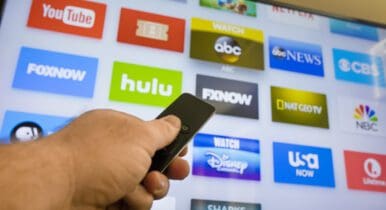
But the spending surge is converging with a media environment that looks nothing like 2022. Voters are watching local news on streaming apps disconnected from the original broadcast. CTV adoption has accelerated, with streaming accounting for 47.6 percent of TV share in April, according to Nielsen, surpassing cable and broadcast combined. The number of platforms competing for ad dollars has multiplied, splintering the audiences that linear TV used to deliver in bulk.
The planning playbooks from previous cycles weren’t designed for these conditions, and applying them wholesale will drain campaigns’ budget and reach.
That mismatch shows up most clearly in how campaigns think about ad inventory. Every cycle, the same fear takes hold: There won’t be enough to go around. For linear TV, the concern is legitimate because Federal Communications Commission rules give candidates protected access to airtime in the weeks before primaries and general elections. In competitive markets, local TV spots genuinely run out. Campaigns that haven’t reserved early will pay more – or get bumped entirely.
But the digital side of the market doesn’t work the same way, and campaigns that treat it like linear TV are solving the wrong problem. Yes, premium CTV placements in battleground states will get tight, and major streaming platforms like Netflix, Amazon Prime Video and Disney+ don’t accept political advertising, which concentrates political CTV spending on a smaller set of platforms.
Related
And with political CTV spending alone projected to hit $2.9 billion this cycle – nearly double the $1.6 billion spent in 2022 – competition for those placements will be fierce. But the broader digital market still offers far more room than linear ever has through more channels and platforms to reach the voters.
The opportunity is real, but only if campaigns are working with partners that can show exactly where their ads are running and give honest, up-to-date projections about what’s available.
Efficiency at Scale Still Requires Judgment
The good news is that the tools available to political media buyers have gotten meaningfully better. Artificial intelligence-driven optimization can now evaluate ad performance across platforms in real time and identify which placements reach the right voters at the lowest cost. Automated systems adjust spending to market conditions faster than any manual process, and cross-platform data helps campaigns put their budgets where they’re actually making contact with target audiences, not just where ad space is cheapest.
But automation without oversight is how campaigns end up running ads in low-quality environments and calling it efficiency. The technology is only as good as the people interpreting what it produces. Campaigns that hand the keys entirely to an algorithm, without experienced operators reviewing where ads are actually landing and whether they’re reaching the right people, are trading one problem for another. Overspending gets replaced by misspending.
The strongest approach in a cycle this competitive combines automated buying for volume and reach with hands-on managed services for the moments where precision and human judgment matter most.
The Prep Work That Separates September From Chaos
The window between now and late August is when the most consequential planning decisions are made or missed. And the consequences play out in the final eight weeks, when the pace of a competitive cycle exposes every operational gap.
For digital buying, the priority is identifying and testing ad placements before the market tightens. Campaigns that have already vetted where their ads will run and confirmed they’re reaching the right voters will buy at more predictable prices when demand peaks. Those that wait until September are entering a crowded market with limited options and less leverage. For premium CTV, particularly in the most competitive states and districts, ad space is already getting reserved.
But preparation goes beyond reserving ad space. The stretch from Labor Day to Election Day compresses decision-making to a degree that exposes every operational weakness a campaign carries. Creative needs to change overnight in response to breaking news. Ad schedules get pulled and redeployed within hours. Troubleshooting doesn’t wait until Monday morning. That kind of responsiveness requires dedicated political ad operations teams who treat the vertical as a year-round priority, not a seasonal add-on.
It also requires flexibility in where and how you buy. Campaigns locked into a single platform face constraints precisely when they need options. The ability to run ads across multiple buying platforms and publishers, while maintaining quality and transparency, gives campaigns room to adjust when conditions change — which they will, repeatedly, between September and November.
Todd Novick is the vice president of political at AI Digital.